

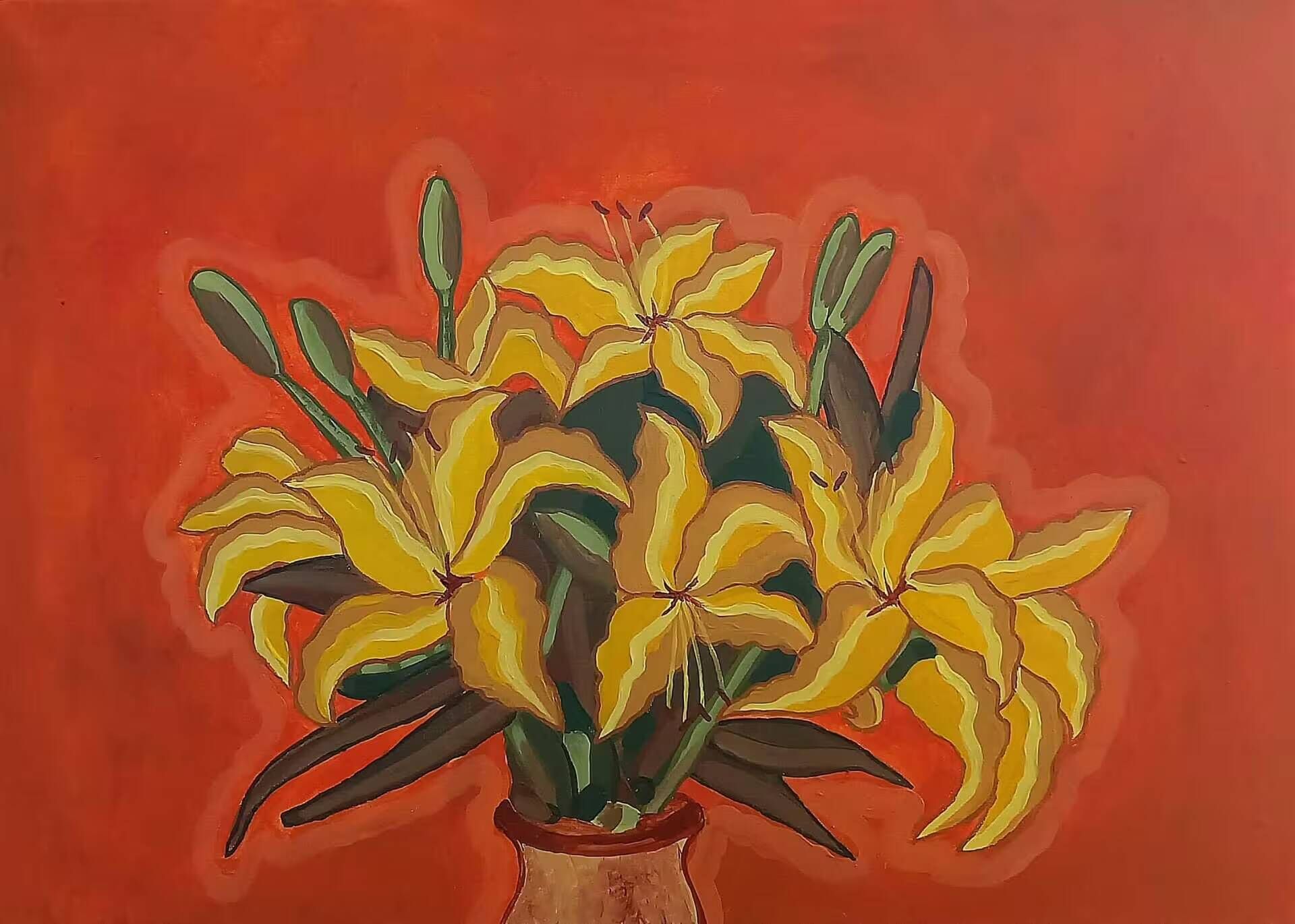

by Matthea
Status: 05.23.2026
Flower paintings – timeless works of art brimming with life
Flowers are more than just pretty splashes of colour in a vase. They are symbols of beauty, transience and sensuality – and they have inspired artists for centuries. No wonder, then, that flower paintings are among the most popular subjects in art history. Whether it’s Monet in a French garden, Van Gogh with his famous sunflowers, or Georgia O’Keeffe with her intense close-ups: flower paintings tell stories, capture emotions and bring a piece of nature to the canvas.
At the same time, flower paintings are also a reflection of their respective eras. They reveal social trends, artistic movements and personal sentiments. Whilst, for example, in the Baroque period, opulent still lifes featuring flowers emphasised not only the beauty but also the transience of life, the Impressionists sought to capture the fleeting play of light on blossoms and leaves. Later, artists such as Georgia O’Keeffe made the flower a symbol of individuality and modern expressiveness. Anyone viewing a flower painting today therefore discovers not only nature, but also the cultural history inscribed in its colours and forms.
Painted flowers and their effect
Pictures of flowers transform the atmosphere of a room. Whether in an office, a surgery or your own living room, bold or delicate floral art possesses powerful symbolic meaning, which is further intensified in floral painting. Beautiful flower paintings symbolise growth, freshness and joy, but also transience. It is precisely this tension between blossoming and wilting that makes the flower painting such a fascinating subject.
In the office, beautiful flower paintings create a relaxed atmosphere that stimulates creativity and makes the working day more bearable. Studies have shown that pictures featuring natural motifs can reduce stress, so a flower painting not only adds colour to the wall but also brings a touch of serenity to the atmosphere. At home, on the other hand, paintings of bouquets often add an emotional touch. A painting of roses can have a romantic effect and emphasise intimacy, whilst a sunflower painting radiates joie de vivre and optimism. Abstract floral paintings, in turn, lend rooms a modern, inspiring touch. Floral paintings are also a popular design element in doctors’ surgeries and therapy rooms. Paintings of plants have a calming effect, build trust and can help alleviate patients’ nervousness to some extent.
It is particularly interesting that the effect of oil paintings featuring flowers depends heavily on the style of depiction. An Impressionist field full of poppies conveys the lightness of a warm summer’s day, whilst Georgia O’Keeffe’s highly detailed works featuring flowers and blossoms appear almost meditative and intimate. The choice of colours in floral painting is also crucial: a vibrant red, as in O’Keeffe’s ‘Red Poppy’ (1927), pulsates with energy, whilst soft pastel shades create an atmosphere of harmony and tranquillity.


Famous artists and their flower paintings
The theme of flowers runs through the entire history of art; there is hardly a significant painter, male or female, who has not at some point devoted themselves to this motif of floral paintings. This is particularly evident in the work of Claude Monet, whose garden in Giverny was not only a place of retreat but also a never-ending source of inspiration for his floral paintings. In his famous ‘Water Lilies’ or his iris studies , shapes and colours blend into one another, so that when viewing his flower paintings, one is almost drawn into nature itself. This fascination with the interplay of light and water finds a very different counterpart in the flower paintings of Vincent van Gogh, whose ‘Sunflowers’ series was created in Arles and is now among the most famous flower paintings in the world. Whilst Monet dissolves nature into shimmering moods of light, Van Gogh’s flower paintings appear wild, intense and almost untamed. The vibrant yellow radiates energy, yet at the same time a deep melancholy is also evident in the wilting blossoms.

From O’Keeffe’s close-ups to Dalí’s floating rose
Georgia O’Keeffe took a radically different approach, depicting flowers in extreme close-up during the 1920s and 1930s. Paintings such as ‘Red Poppy’ or ‘Jimson Weed/White Flower No. 1’ magnify the blooms to such an extent that they appear almost abstract. Her floral paintings are sensual, meditative and invite the viewer to look more closely. Some critics saw symbols of femininity and eroticism in her floral paintings, but O’Keeffe herself emphasised the pure beauty of nature. Her depictions have had a lasting influence on the modern understanding of floral art and continue to inspire new interpretations to this day. Whilst O’Keeffe magnified the flower to the extreme, Salvador Dalí chose a completely different, surrealist approach in his flower paintings. In ‘The Rose’ from 1925, a single flower floats freely against a blue sky, ethereal and mysterious. Dalí removes the rose from its familiar context and transforms it into a metaphysical symbol that both unsettles and fascinates the viewer. With just a single bloom, he tells an entire story of symbolism, dreams and reality in his floral painting.
From Fantin-Latour to Valerie Cee: Flower paintings through the ages
There are also many other examples that demonstrate just how versatile the motif of flower painting is. Henri Fantin-Latour, for example, celebrated the beauty of painted bouquets in his opulent still lifes, lending them an almost monumental character. Paula Modersohn-Becker approached floral painting with an expressive, earthy colour palette, allowing flowers to become living companions to her figure portraits. Emil Nolde, in turn, expressed tremendous power in his colour-rich watercolours, as if the flowers themselves had a voice.
This tradition lives on today. Contemporary artists are revisiting the floral motif and reinterpreting it in fresh contexts within modern paintings of flowers. At the Students’ Art Market, for example, Valerie Cee with abstract floral forms and colours in sensual hues. Similarly, among the SKM artists, Carmen Moreira, Martina Schepperle, Bibiána Sabová, Anaïs Sauvage, Maria-Magdalena Ianchis or Christian Horras all incorporate floral motifs into their works.
Artists such as Jonas Burgert and Katharina Grosse also incorporate floral elements into monumental formats, whereby colour and form transcend mere representation to become independent spaces of experience. Even in photography, for example in the work of Nobuyoshi Araki or Robert Mapplethorpe, the flower plays a role that oscillates between delicate beauty and provocative symbolism. Every floral painting – whether Impressionist, Expressionist, Surrealist or contemporary – is not merely a representation of nature, but also a reflection of its era and the artist’s distinctive style. The spectrum ranges from the tranquil harmony of classical still lifes to the bold explosions of modern abstraction. It is precisely this diversity that makes the flower in art a motif that never loses its relevance and can constantly take on new meanings.


Floral paintings on your own wall
Why buy a floral painting when you could simply put some fresh flowers on display? The difference lies, on the one hand, in their longevity and, on the other, in the artist’s individual interpretation. Whilst a bouquet loses its splendour after just a few days, a painted flower remains vibrant for years to come. Furthermore, a floral painting always incorporates the artist’s subjective interpretation. This is how unique floral paintings are created as original works of art.
Floral paintings not only bring colour to a room, but also an atmosphere that can be calming and inspiring – like a quiet promise that nature has a place indoors too. Depending on whether you opt for a playful, minimalist, modern or abstract piece, you also reveal a great deal about your own personality. A floral painting is therefore never merely decoration, but a form of self-expression that simultaneously reveals both openness and good taste.
Ultimately, a floral painting is much more than just a beautiful eye-catcher. It combines cultural history with personal expression, serves as a reminder of nature and its transience, and brings a touch of timelessness to any room. At Studierenden Kunstmarkt, you’ll find here floral paintings in a wide variety of interpretations by young artists.


Frequently Asked Questions
Studierenden Kunstmarkt is the leading platform for student art in the German-speaking world. It enables art enthusiasts and art lovers to buy artworks directly from art students, thereby providing them with financial support whilst they are studying.
Studierenden Kunstmarkt was founded in 2020 by Erich Reich and his brother. Erich is still the managing director of Studierenden Kunstmarkt and, together with his team, has succeeded in creating a platform that brings together art lovers, those interested in art and art students. To this day, Studierenden Kunstmarkt is entirely self-funded and has not received any external funding from investors.
At any given time, there are several hundred art students and several thousand works of art on the Student Art Market. A good place to start if you’re looking for an initial overview of the artists is the ‘Artists of the Month’ section.
Just like normal galleries, Studierenden Kunstmarkt receives a commission on each artwork sold. This funds the running of the platform, its maintenance and the salaries of Studierenden Kunstmarkt’s staff. In addition, we support the students, are on hand to advise on any queries, and run free advertising for them on Instagram, Facebook, Google and in our email newsletter, which has several thousand art lovers as subscribers.
There are many ways you can start investing in young artists on the student art market. One option is to sign up for our free email course, ‘Become an Art Expert in 7 Days’. In it, we’ll share a few basics with you, as well as some of our insider tips on which artists have particular potential. Find out more
Take a look at our most popular artists at the Student Art Market


News banner


