

The fusion of dream and reality in Surrealism
In Surrealism, logic dissolves. Through their Surrealist images, artists create new rules based on their own imagination and take the viewer on a journey. Boundaries are pushed and new worlds are revealed. Surrealist works deliberately play with dreams, symbols and surprising combinations, making them multi-layered and often mysterious. Art that surprises and lingers in the mind.


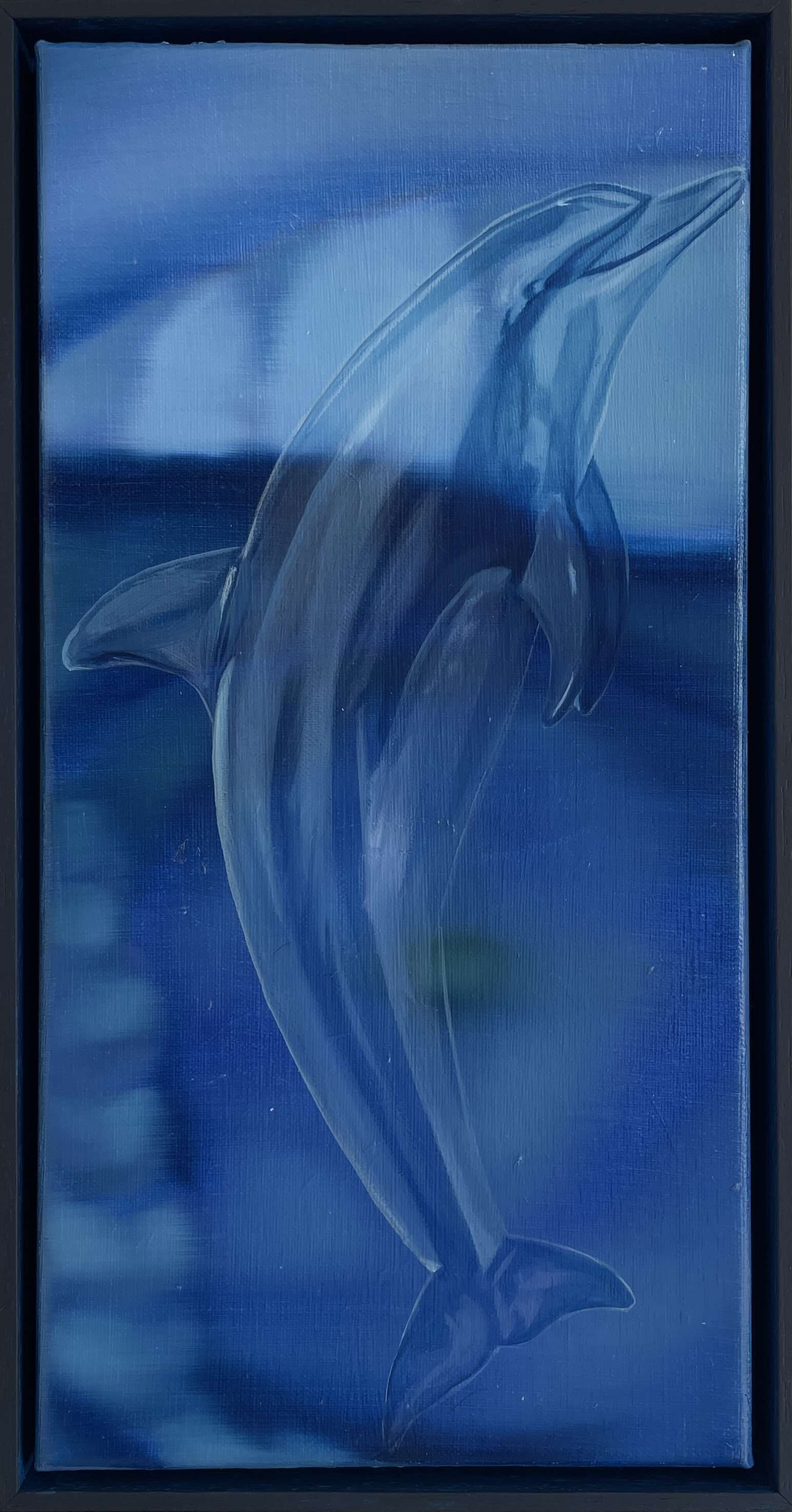


Between fantasy and reality: Surrealist art
Surrealist art has fascinated people for over 100 years – and seems more relevant today than ever. Dreamlike imagery, enigmas, intuitive lines and unexpected combinations continue to captivate us to this day. What once began as an artistic revolution against the confines of reality is now one of the most popular artistic styles of all. Many people consciously choose Surrealist art because it opens up spaces, sparks stories and creates an atmosphere that is neither purely decorative nor arbitrary.
When you buy surrealist art, you’re bringing a piece of that creative freedom into your home. Whether inspired by Dalí, Miró or Magritte, or completely reinterpreted, surrealist images bring energy, depth and a tangible ‘something extra’ to living and working spaces. Our artists combine imagination, craftsmanship and a modern visual language to create unique works that not only look beautiful but also have a real impact. Discover surrealist art that surprises you anew every day and transforms your spaces in a special way.
Surrealist art through the ages
The historical development of Surrealist art began in literature: in 1924, André Breton published his ‘Surrealist Manifesto’, which laid the foundations for a completely new artistic way of thinking. Breton sought to fuse dream and reality into an expanded reality – a ‘surreality’ that deliberately challenges logic and social norms. Supported by Sigmund Freud’s psychoanalysis, the unconscious took centre stage in Surrealist art, and just a few years later, painters, sculptors and photographers incorporated these ideas into their own visual language.
Paris during the Golden Twenties provided the ideal breeding ground for Surrealist art. After the First World War, people were seeking a fresh start, intensity and new experiences. Artists, writers and intellectuals flocked to the city, which was developing into the cultural heart of Europe. At the same time, dissatisfaction was growing with a society that had allowed war and destruction to take place. Surrealist art emerged as a counter-movement: rebellious, critical and determined to counter the old bourgeois norms with a radically different view of the world.
The Surrealists wanted to ‘tear away the veil of reality’ – and to this end sought a higher reality beyond reason and morality. Dreams, states of intoxication, visions and spontaneous ideas became the creative driving force and defining features of Surrealism. Breton’s manifesto provided a theoretical foundation for this approach and shaped an entire generation of artists who were drawn to this new freedom. What seemed provocative and anarchistic at the time went on to become one of the most influential movements in modern art history.
Dreamlike visions – the most famous works of Surrealist art
Surrealist painting gave rise to a number of iconic artists whose works continue to shape the image of this art movement to this day. Salvador Dalí is regarded as one of the best-known exponents of Surrealist art: in works such as *The Persistence of Memory*, he created hyper-realistic dreamscapes brimming with symbolism, paradoxical perspectives and psychological enigmas. René Magritte, too, played masterfully with reality and illusion – his famous painting ‘La trahison des images’ (‘This is not a pipe’) deliberately challenges the viewer’s perception and ranks among the movement’s most ingenious works.
Alongside the Surrealist artists of the so-called ‘verist’ current, artists of ‘absolute Surrealism’ also had a lasting influence on the movement. Joan Miró developed surreal images using a visual language of spontaneous, abstracted forms, through which he sought to make the unconscious directly visible. Hans (Jean) Arp, on the other hand, relied on organic, biomorphic forms and automatic techniques designed to emerge without conscious control. The most famous German exponent of Surrealist art, Max Ernst, experimented extensively: using techniques such as frottage and grattage, he created dreamlike worlds full of hybrid figures and inexplicable spaces that made the irrational visible.
The diversity of Surrealist artworks demonstrates just how differently the fundamental principle – the search for the unconscious – could manifest itself. Meret Oppenheim’s famous ‘Fur Cup’, for example, combines everyday objects in a disconcerting way, thereby blurring the boundaries between the familiar and the uncanny. Similarly, artists such as Frida Kahlo and photographers such as Man Ray extracted motifs from their reality and placed them in new, sometimes unsettling contexts. Whether paintings, sculptures or photographs – Surrealist art thrives on the tension between dream and reality, chance and intuition, clarity and mystery.
Surrealist paintings on the Student Art Market
Surrealist paintings have the special ability to instantly transform a room into a little dream world – sometimes quietly poetic, sometimes vibrantly colourful or wonderfully enigmatic. At Studierenden Kunstmarkt, you’ll find Surrealist art by young artists who capture precisely this feeling and interpret it in their own unique, fresh way. From Surrealist paintings and photography to Surrealist portraits – discover Surrealist art in all its facets. Many of the works are not only perfect for your home but also make for an exciting investment: you can buy directly from up-and-coming talents at fair prices, and follow their development right from the start. In our ‘Artist of the Month’ category, you can discover particularly promising emerging artists and buy surrealist artworks. Here, we introduce you to some of our exciting artists who are reimagining surrealism:
Mersedeh Sharifi creates warm, evocative visual worlds in which figures oscillate between reality and fantasy. Her paintings feel intimate, physical and, at the same time, dreamlike and otherworldly – as if her protagonists were suspended in a moment of limbo. Born in Tehran and trained at the HBK Braunschweig and the Düsseldorf Art Academy, she combines cultural influences, sensual atmospheres and psychological subtleties to form a highly distinctive artistic style. Her exhibitions – from Braunschweig and Hanover to the Baksi Museum in Turkey – demonstrate the multifaceted ways in which she translates human interaction into painterly intimacy.


Janek Wisse works at the intersection of chance, perception and imagination. Inspired by Alexander Cozens’ blot method and the phenomenon of pareidolia, he develops his motifs from chaotic structures – faces, figures or landscapes seem to emerge of their own accord from abstract forms. For him, painting is about devotion: letting go of one’s own preconceptions in order to follow the process. He has been studying painting at HAW Hamburg since 2024 and creates visual worlds that are at once intuitive, mysterious and highly evocative.


Anton Koval transforms experiences and influences into ethereal, illusory worlds that hover between reality and fantasy. The art history student, who lives in Leipzig, works primarily in oil – fascinated by the lustre, the depth of colour and the atmospheric possibilities of the medium. He is particularly drawn to large formats, as this is where his multi-layered glazes and slow, intuitive working processes unfold most effectively. Koval’s paintings take shape layer by layer, often accompanied by long moments of contemplation. His exhibitions – including those in London, the Baumwollspinnerei in Leipzig and various German galleries – demonstrate how consistently he is developing his own visual language.


FAQs on Surrealism
Surrealist art often feels like a blend of dream, fantasy and reality. When things appear in unusual places, physically impossible events occur, or objects take on entirely new meanings, this is usually a sign of surrealism. Many works seem enigmatic and are deliberately designed to unsettle the viewer. The mood is often poetic, mysterious or absurd.
In Surrealist art, it is not only the visible that is depicted, but also what goes on inside – thoughts, dreams, fears and fantasies. The artists sought to lay bare the unconscious and break free from logic and control. This gives rise to images that evoke emotion rather than explain. Surrealism is, therefore, an art of freedom and imagination.
Alongside historical figures such as Dalí, Magritte and Ernst, there are many contemporary artists who draw on elements of Surrealist art. Today, they often combine dream worlds with pop culture, digital motifs or new techniques. Surrealism lives on because imagination and the unconscious remain timeless. Young artists, too, are constantly reinterpreting the movement.
Particularly well-known figures in Surrealist art include Salvador Dalí, René Magritte, Max Ernst, Joan Miró and André Breton. Each of these artists developed their own distinctive style. Dalí is known for hyper-realistic dreamscapes, Magritte for philosophical enigmatic images and Miró for abstract, playful visual worlds. Together, they shaped the image of Surrealism.
Surrealism emerged in Paris in the early 1920s and continued to develop into the 1940s. It was closely linked to the period following the First World War, when many artists were searching for new forms of expression. Later on, Surrealism also influenced Pop Art, Conceptual Art and contemporary painting. Its ideas continue to have an impact to this day.