
by Matthea
Status: 06.29.2025
A Life Devoted to Colour – Artworks by Emil Nolde
Key points at a glance
- Emil Nolde’s artworks are characterised by expressive, powerful colours and emotional intensity, particularly in his floral watercolours, North Sea scenes and evening landscapes, or his best-known work, “Flower Garden (Thersen’s House)”.
- This article will help you understand Nolde’s technique, colour composition and atmospheric visual language, and place his significance within the context of Expressionism.
- It is of particular interest to art enthusiasts*, collectors* and anyone wishing to appreciate Nolde’s expressive treatment of nature, light and mood.
Emil Nolde knew how to bring emotions to life on his canvas. Whether vibrant floral watercolours or atmospherically charged landscapes – Emil Nolde’s artworks are characterised by a pointed and often dramatic use of colour, which is still regarded today as one of the most striking hallmarks of Expressionism to this day. During the Nazi era, Emil Nolde’s artworks were branded as ‘degenerate’ despite his active support for National Socialism. Whilst his political views and ideology must be viewed critically, his art is still regarded today as a powerful testament to Expressionism.
A portrait of Emil Nolde
The German painter Nolde, born Hans Emil Hansen in 1867 in the German-Danish border region, came from a humble background. His artistic talent became apparent at an early age, but it was only after training as a woodcarver and working in various roles in furniture factories, as well as at the School of Applied Arts in Flensburg, that he found his way to painting. After the Munich Academy rejected his application, Nolde forged his own path – from private tuition with Adolf Hölzel to the Académie Julian in Paris. In 1902, he adopted the name of his birthplace: Emil Nolde. In the same year, he married the Danish actress Ada Vilstrup and found in her a lifelong companion who supported his artistic development.
Nolde moved in avant-garde circles for a time, and was briefly a member of the ‘Brücke’ artists’ group as well as the Berlin Secession. Yet his need for independence soon led him to distance himself from such groups again. Encounters with artists such as Edvard Munch and friendships, for example with the Swiss artist Hans Fehr, had a far greater influence on him. In particular, his discovery of watercolour around 1908 proved to be a milestone – from then on, Nolde developed a technique characterised by luminous colour intensity and atmospheric depth, which reached its peak in his famous flower and landscape paintings.
Shortly before the First World War, Nolde joined an expedition to New Guinea, which also took him through Asia and North Africa. The impressions gained from this journey significantly broadened his artistic vision and are reflected in Emil Nolde’s works of art. In the 1920s, he settled with his wife in Seebüll – a home and studio he had designed himself, complete with a large garden, which served as both a source of inspiration and a place of retreat. Even when the artist was declared a ‘degenerate artist’ during the Nazi era, Nolde continued to create – often in secret, using watercolours. After the Second World War, he received belated recognition for his art. Exhibitions of Emil Nolde’s works at the Venice Biennale and the documenta in Kassel cemented his reputation. Nolde died in Seebüll in 1956 – his work lives on to this day in museums and discussions.
Nolde and National Socialism – between endorsement and ostracism
Emil Nolde’s relationship with National Socialism was characterised by a profound ideological contradiction. Although his Expressionist visual language fundamentally contradicted the regime’s cultural-political ideals and was classified as ‘degenerate art’, Nolde openly welcomed the National Socialists’ rise to power. In 1934, he signed the ‘Call of the Cultural Workers’, in which artists were urged to support Hitler, and repeatedly made disparaging remarks about Jewish colleagues such as Max Liebermann. His nationalistic and anti-Semitic convictions led him to seek to place himself actively at the service of Nazi ideology as an artist – an aspiration which, however, was not reciprocated by the authorities.
Despite his political affinity with Nazi ideology, Nolde was hit with the full force of the regime’s art policy in 1937. Over 1,000 of Emil Nolde’s artworks were confiscated, 48 of which were publicly displayed in the propaganda exhibition ‘Degenerate Art’. At the same time, Nolde was expelled from the Reich Chamber of Fine Arts – a de facto professional ban that prohibited exhibitions, sales and publications. For years, the artist strove for rehabilitation, submitting statements and petitions in which he emphasised his ‘Germanic outlook’ and loyalty to the regime. However, his expressive style of painting – and thus the artworks of Emil Nolde – remained incompatible with the National Socialist conception of art; his work continued to be categorised as ‘degenerate art’, and his quest for recognition as a state-sponsored artist thus proved in vain.
In 1941, Nolde was finally banned from working, though this did not constitute a general ban on painting. During this period, in the seclusion of his home in Seebüll, he produced over 1,000 small-format watercolours, which later became known under the title ‘Ungemalte Bilder’ (Unpainted Pictures). These works by Emil Nolde, originally intended as preparatory studies, contributed significantly after the war to the legend of the ‘persecuted artist’ – a self-portrayal that remained unquestioned for a long time. It is only through more recent research that Nolde’s ideological affinity with National Socialism and his anti-Semitic beliefs have been systematically examined. Today, his legacy appears ambivalent: as an artist of great painterly power – and at the same time as a figure whose political stance must be critically scrutinised.
Luminous poppy fields and dramatic coastlines – Emil Nolde’s most famous works of art
Emil Nolde is regarded as one of the most significant colourists of the modern era. His paintings are characterised by an intense, often almost glowing use of colour, which allows nature and emotion to merge directly. This expressive power unfolds with full intensity, particularly in his flower and landscape paintings. Emil Nolde’s artworks bring colours to life: whether blazing poppy fields, turbulent coastlines or mysterious marshlands, Nolde’s paintings condense moods into powerful, often dramatic compositions. Whilst the German painter Nolde remains representational, he increasingly dissolves the visible world into colour, rhythm and emotion.
Poppy blossoms as a powerful experience of colour
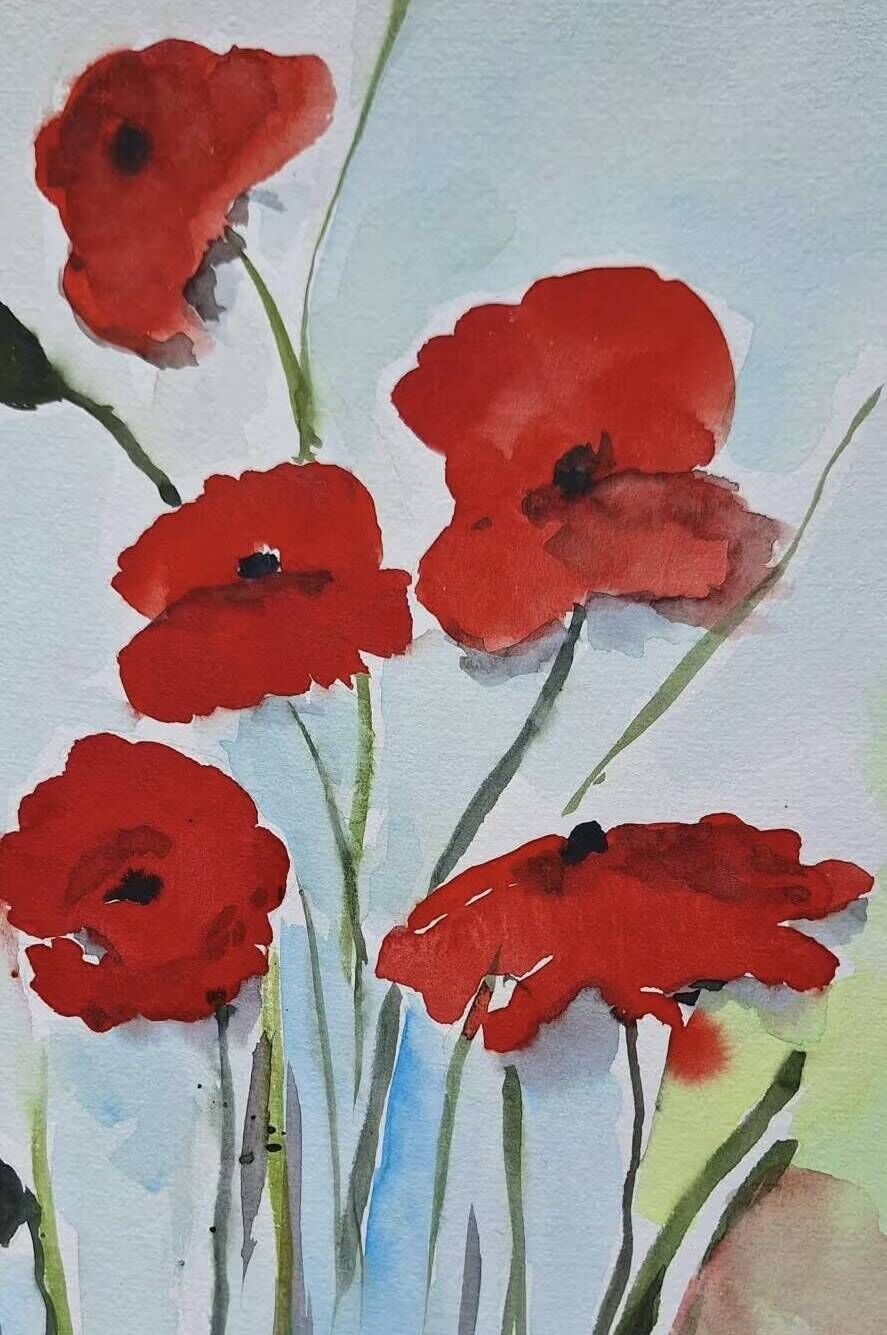
Among the most iconic motifs in Emil Nolde’s works are his depictions of poppy blossoms. The vibrant shades of red and orange appear almost excessively intense and seem to unfold from within the picture. These works make it particularly clear just how much Nolde understood colour as a force in its own right. Nolde’s poppy fields do not merely depict nature; rather, they condense the atmospheric spaces of summer’s exuberance into an almost dreamlike sublimation. This blend of representationalism and expressive freedom makes the poppies a central symbol of his oeuvre.
The Last Supper – Sacred Imagery in Expressionism
The tranquillity of the North in seascapes and landscapes
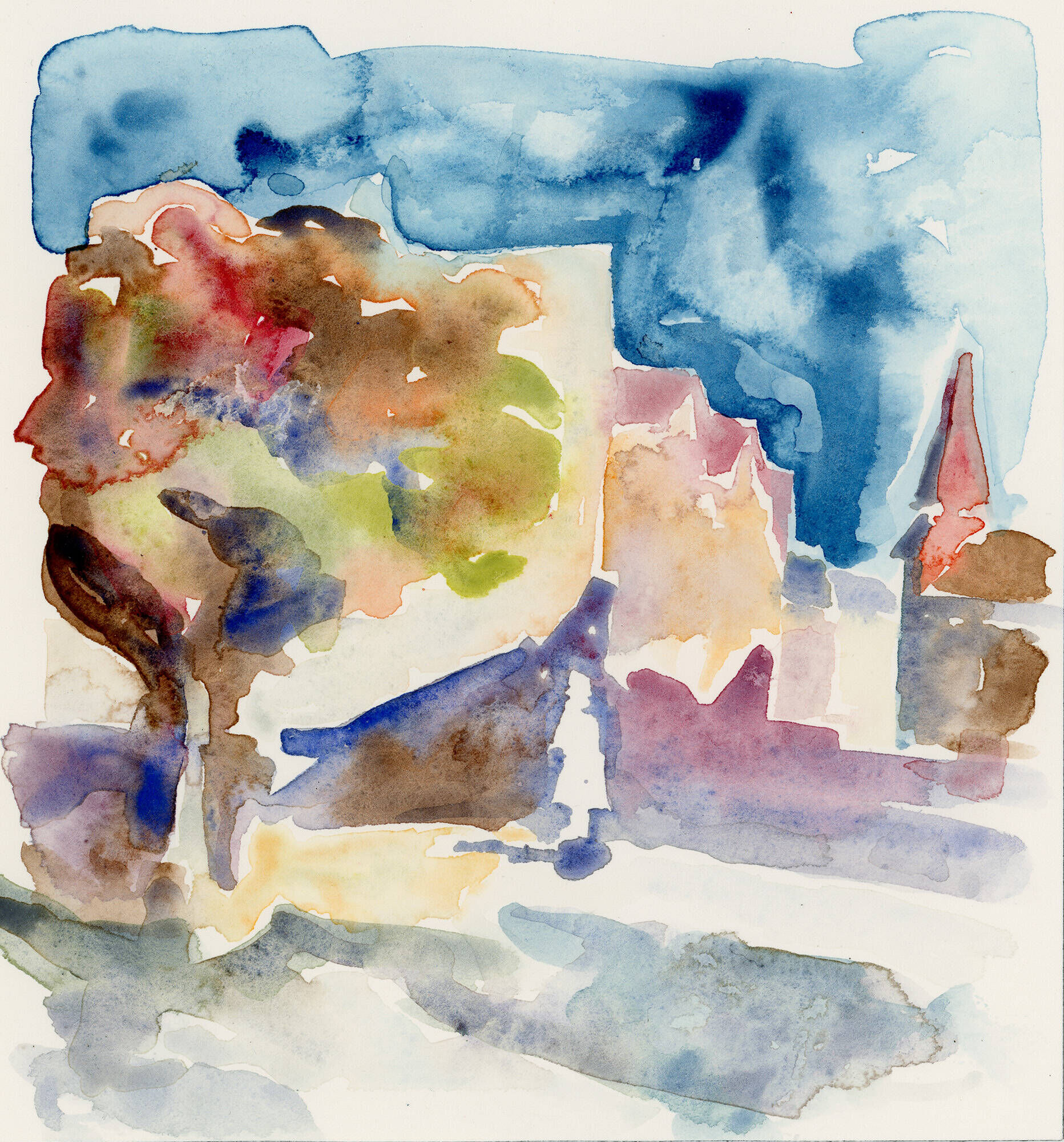
Another key body of work consists of Nolde’s seascapes and landscapes. The North German coast, with its ever-changing light, vast horizons and rough seas, became an inexhaustible source of inspiration for him. In his depictions of the North Sea, the experience of nature often escalates into something dramatic: waves break against heavy swathes of colour, whilst the sky appears both charged with energy and in constant motion. These seascapes are rarely mere landscape studies, but rather expressions of inner states – oscillating between tranquillity, menace and the overwhelming force of nature. His marshlandscapes and evening scenes also fit into this realm of tension. Light, atmosphere and the interplay of colours are always at the forefront, creating works of great emotional power.
Significance and market value of Nolde’s works
Among Nolde’s best-known works and those commanding high prices are, alongside his flower paintings and seascapes, works such as ‘Blumengarten (Thersens Haus)’, which has fetched record prices at auction. His artworks are now featured in major collections worldwide, including major international museums. Despite critical scrutiny of his biography, interest in his paintings remains undiminished. The expressive power of his use of colour continues to make Emil Nolde one of the most influential figures of Expressionism to this day.
Discover fascinating artworks that don’t always fit neatly into a single category. Be inspired and perhaps you’ll soon discover your new favourite piece.
Between vibrant colours and responsibility: Emil Nolde’s legacy today
Despite his controversial political views, Emil Nolde’s artworks represent a significant contribution to modern art. His ability to imbue colours with an inner luminosity and to make emotions immediately visible is considered unique. Emil Nolde and Expressionism remain closely intertwined. Particularly in his watercolours and oil paintings, an expressive power unfolds that continues to captivate viewers to this day. Emil Nolde’s artworks combine representational art with an almost spiritual intensity of colour – a distinctive style that made him one of the most striking representatives of Expressionism.
Today, works by Emil Nolde are held in renowned museums worldwide, including in New York, St Petersburg, Vienna and Berlin. His presence in international collections testifies to the enduring relevance of his art. At the same time, the examination of his political past has ushered in a new way of interpreting his work: museums and foundations – such as the Seebüll Ada and Emil Nolde Foundation – are increasingly engaging with the artist in a more nuanced manner. Thus, Nolde remains a significant yet ambivalent chapter in art history – one whose artistic legacy cannot be understood without critical contextualisation.

Frequently asked questions about the artist Emil Nolde
Emil Nolde (1867–1956) war ein bedeutender deutscher Expressionist, bekannt für seine lebendigen Farbkompositionen in Aquarellen und Ölgemälden. Er prägte vor allem die Darstellung von Blumen, Landschaften und Meeresmotiven und gilt als einer der einflussreichsten Künstler des frühen 20. Jahrhunderts. Seine Biografie ist neben seiner Kunst auch von kontroversen politischen Positionen geprägt.
Emil Noldes Kunst zeichnet sich durch eine intensive und leuchtende Farbgebung aus, die seinen Werken eine emotionale Tiefe und Lebendigkeit verleiht. Er verband expressiven Farbauftrag mit gegenständlichen Motiven, wodurch seine Bilder eine einzigartige Balance zwischen Abstraktion und Realismus erhielten. Die Farben seiner Aquarelle und Ölgemälde strahlen eine emotional spürbare Kraft aus.
Zu Noldes bekanntesten Werken zählen seine farbintensiven Mohnblumen-Aquarelle, stürmische Meereslandschaften und norddeutsche Landschaftsbilder wie „Blumengarten (Thersens Haus)“ oder die „Herbstmeer“-Serie. Diese Motive sind ikonisch für seinen expressiven Stil und werden in wichtigen Museen weltweit ausgestellt.
Die Preise für Werke von Emil Nolde variieren stark je nach Größe, Technik und Bedeutung des Werks. Kleinere Aquarelle können im niedrigen fünfstelligen Bereich liegen, während größere Ölgemälde bei Auktionen bereits mehrere Millionen Euro erzielen. Ein Rekordpreis lag bei über 4 Millionen Euro für ein bedeutendes Gemälde von Nolde.
Frequently Asked Questions
Studierenden Kunstmarkt ist die führende Plattform im deutschsprachigen Raum für studentische Kunst. Sie ermöglicht Kunstinteressierten und KunstliebhaberInnen Kunstwerke direkt von Kunststudierenden zu kaufen und sie somit während des Studiums finanziell zu unterstützen.
Studierenden Kunstmarkt wurde 2020 von Erich Reich und seinem Bruder gegründet. Erich ist noch immer Geschäftsführer von Studierenden Kunstmarkt und hat es gemeinsam mit seinem Team geschafft, eine Plattform zu kreieren, die Kunstliebhaber, Kunstinteressierte und Kunststudierende zusammenzubringen. Bis heute ist Studierenden Kunstmarkt komplett selbst finanziert und hat keine externen Gelder von Investoren aufgenommen.
Zu jedem Zeitpunkt gibt es mehrere hundert Kunststudierende und mehrere tausend Kunstwerke auf Studierenden Kunstmarkt. Ein guter Einstieg, um einen ersten Überblick über die KünstlerInnen zu erhalten, ist die Kategorie KünstlerInnen des Monats.
Genau so wie normale Galerien, erhält Studierenden Kunstmarkt eine Provision pro verkauftem Bild. Damit wird der Betrieb der Plattform, die Instandhaltung, sowie die Angestellten von Studierenden Kunstmarkt finanziert. Zusätzlich unterstützen wir die Studierenden, stehen beratend bei allen Fragen zur Verfügung und schalten kostenlos Werbung für die Studierenden auf Instagram, Facebook, Google und unserem E-Mail Newsletter mit mehreren tausend KunstliebhaberInnen als Abonnenten.
Es gibt viele Möglichkeiten, wie du beginnen kannst, in junge Künstler:innen auf Studierenden Kunstmarkt zu investieren. Eine Möglichkeit ist es, dass du dich zu unserem kostenlosen E-Mail Kurs “In 7 Tagen zum Kunst Profi” anmeldest. Dort teilen wir ein paar basics mit dir und auch einige unserer Geheimtipps, welche Künstler:innen besonders viel Potential haben. Mehr erfahren
Take a look at our most popular artists at the Student Art Market

News banner