Blaues Gefäß
| Edition | Original Art |
|---|---|
| Sujet | Other |
| Technique | Painting |
| Height | 100 cm |
| Width | 100 cm |
| Length/Depth | 2 cm |
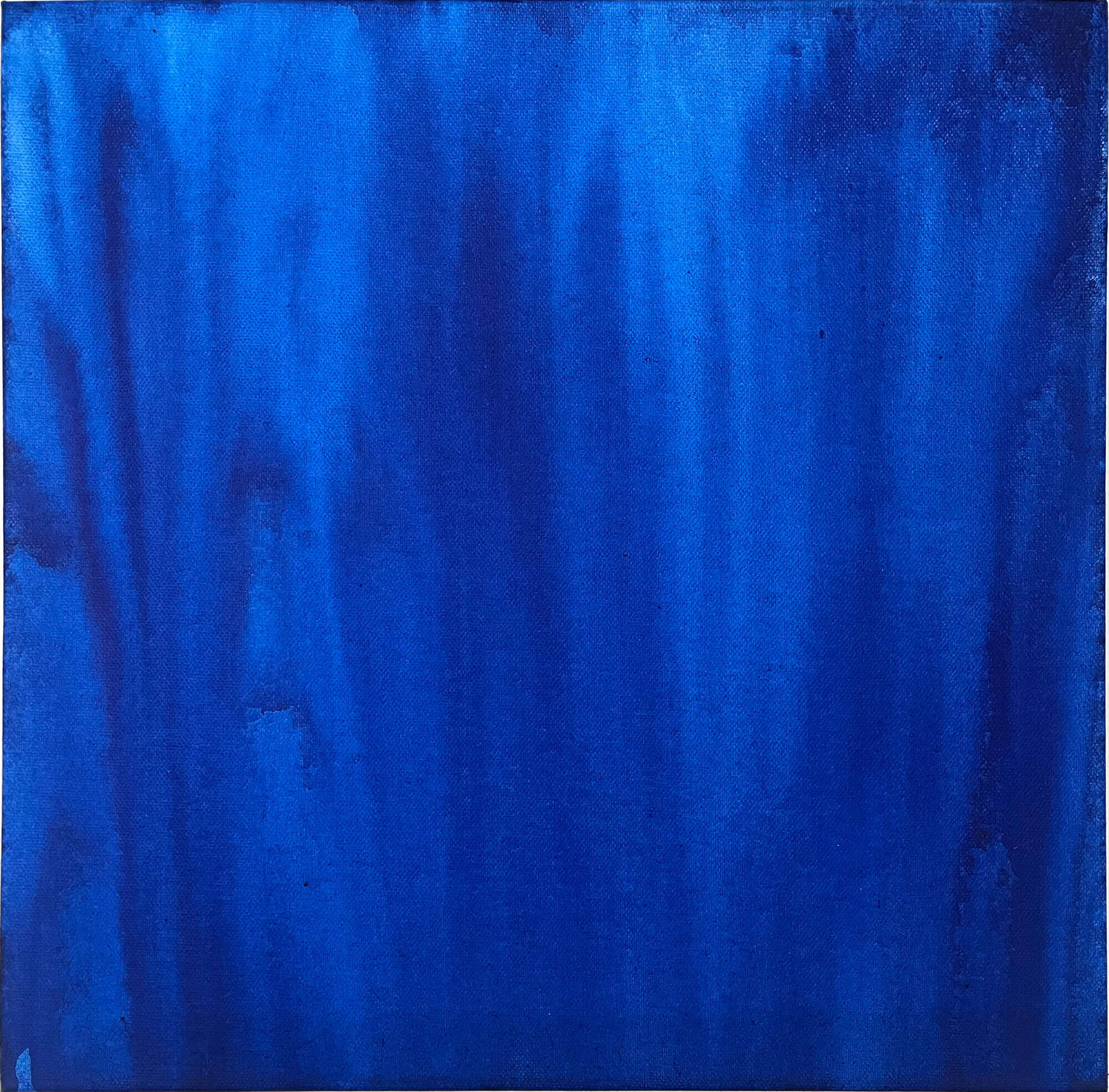
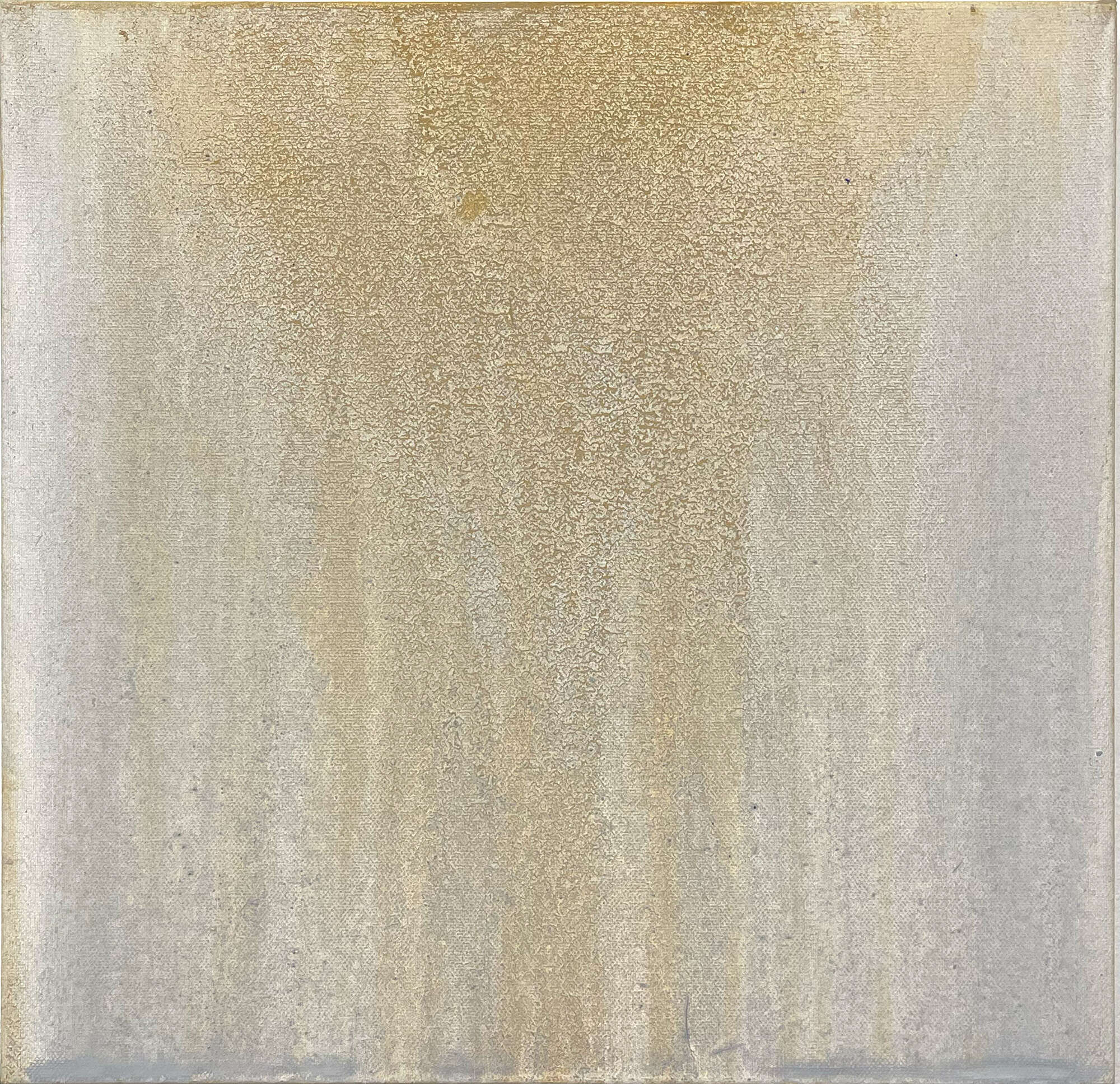
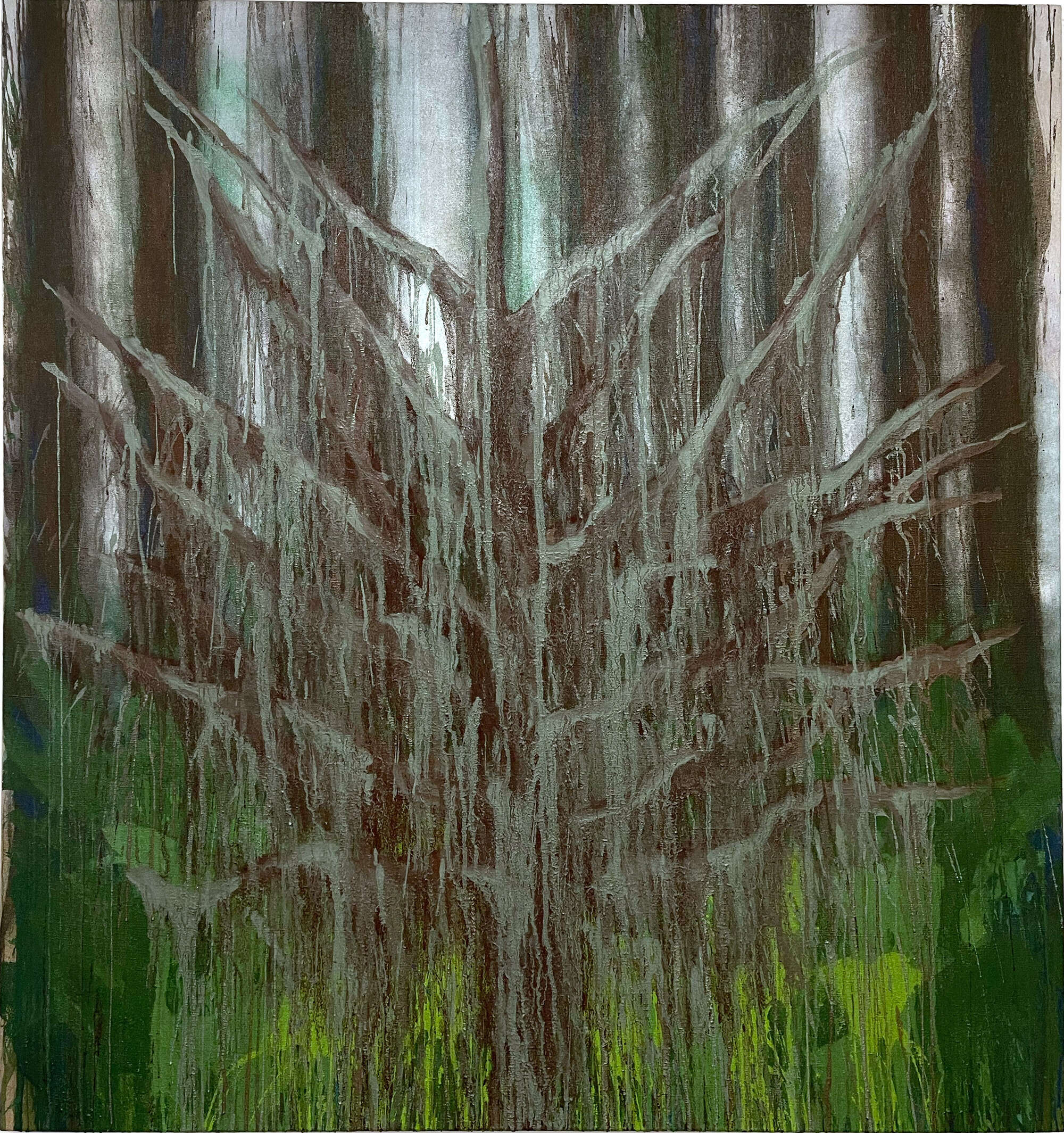
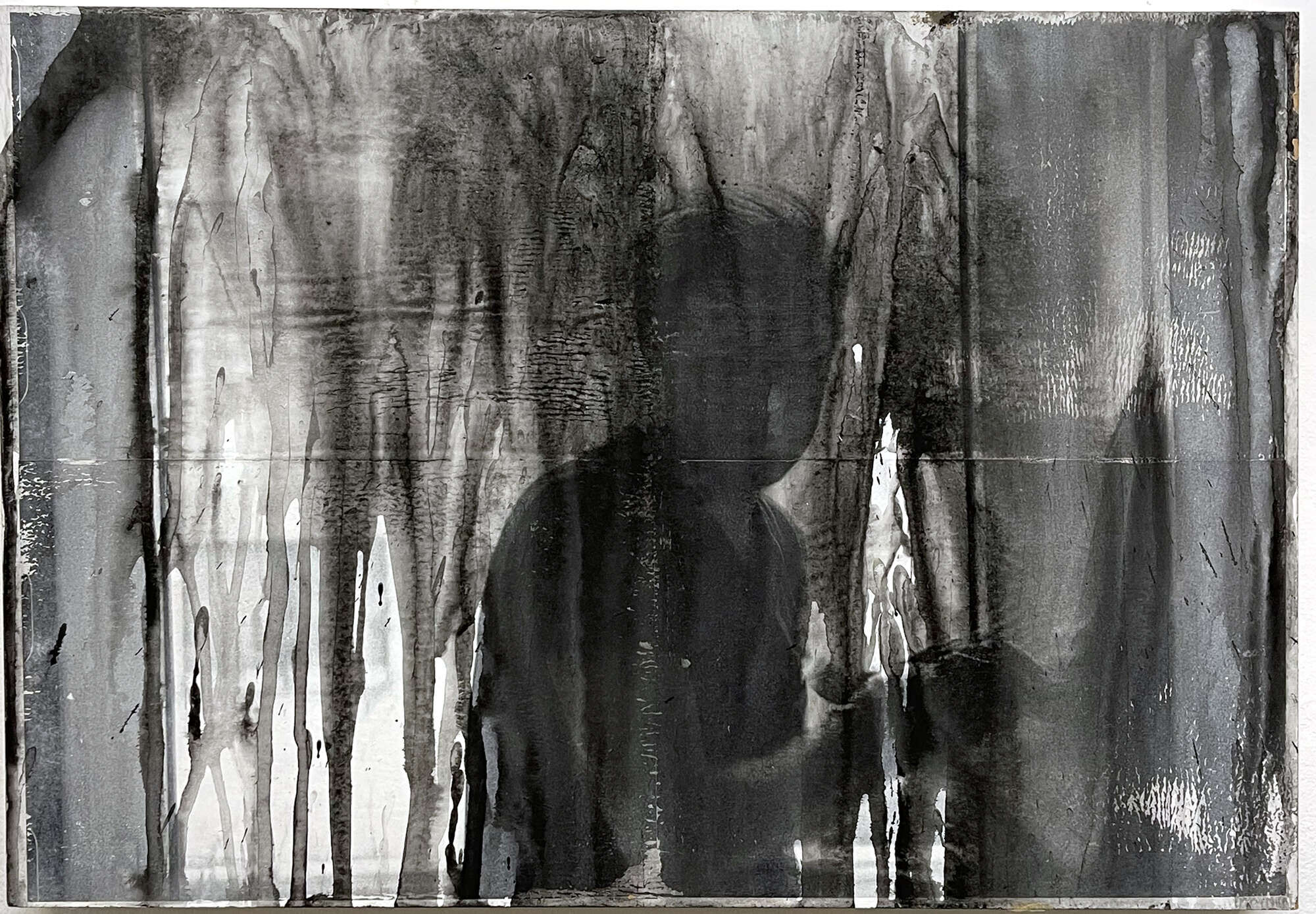
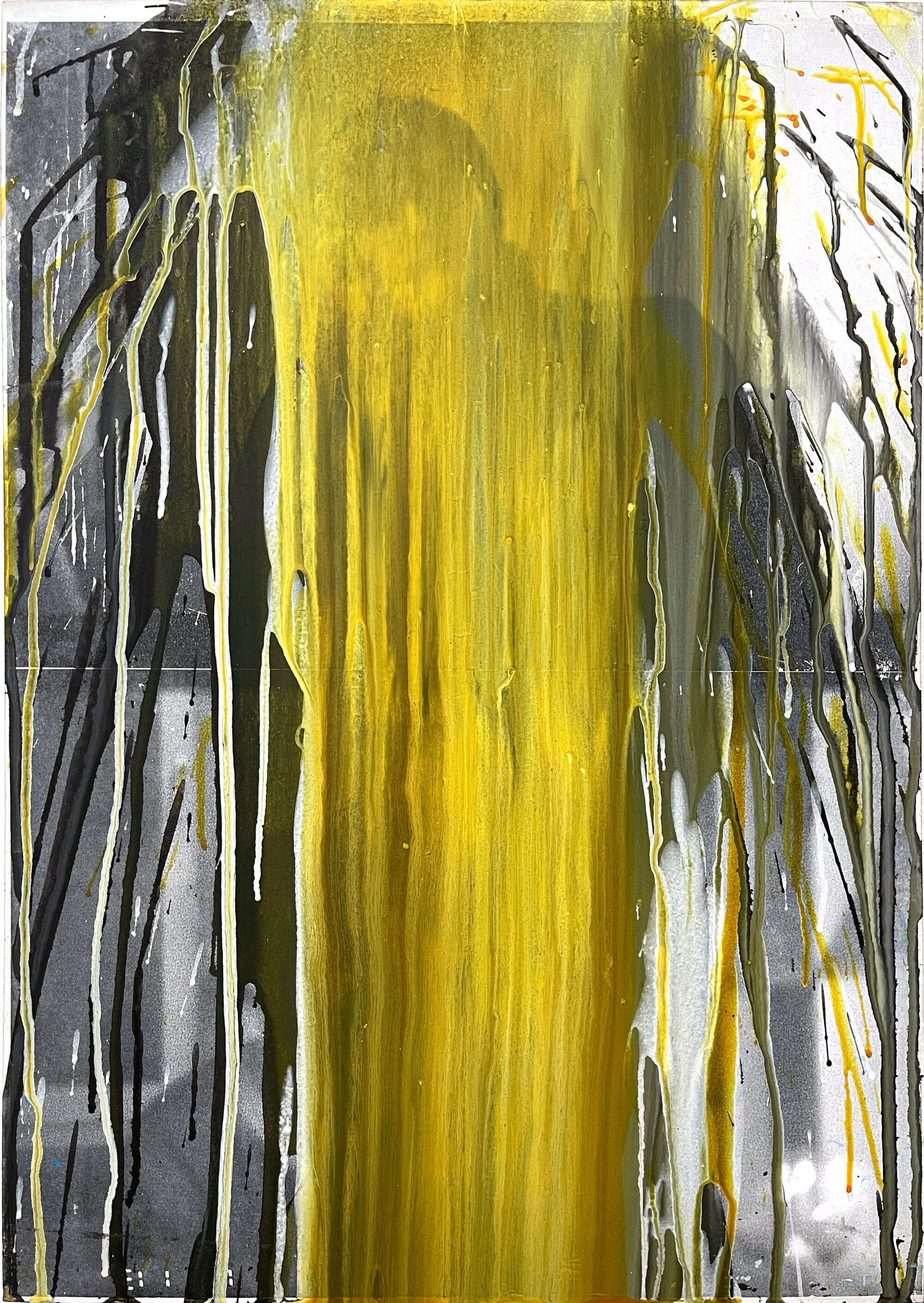
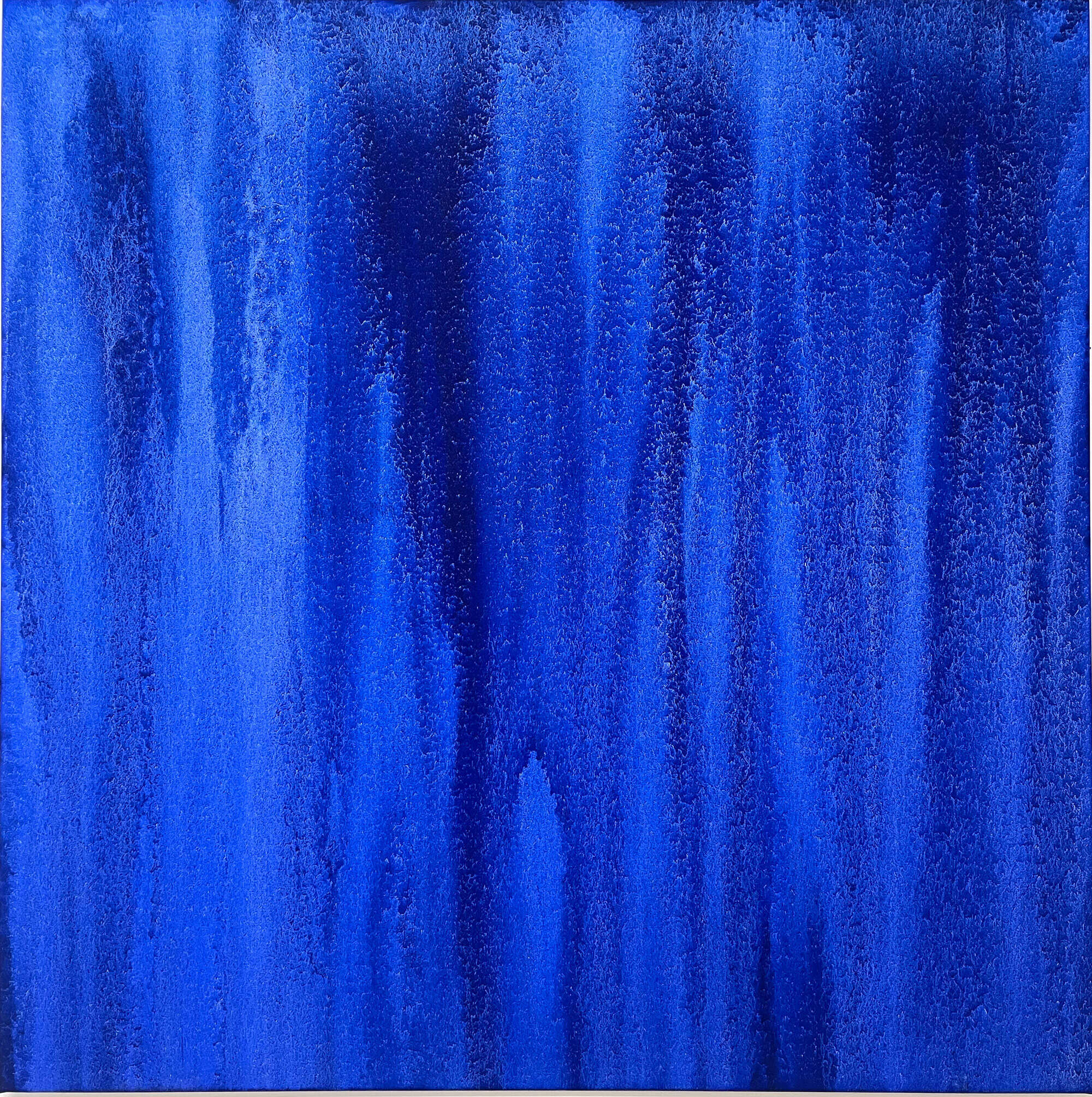
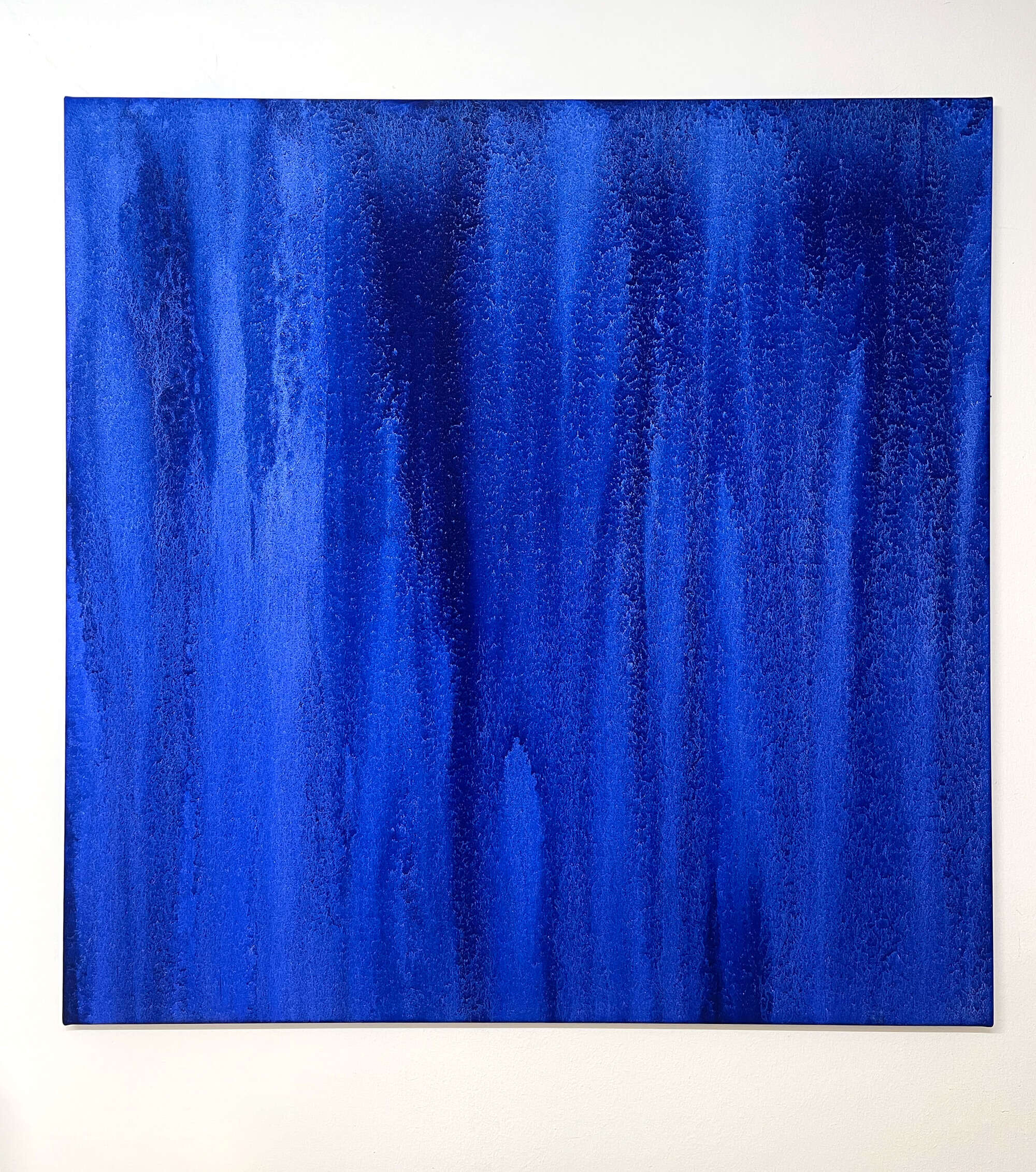
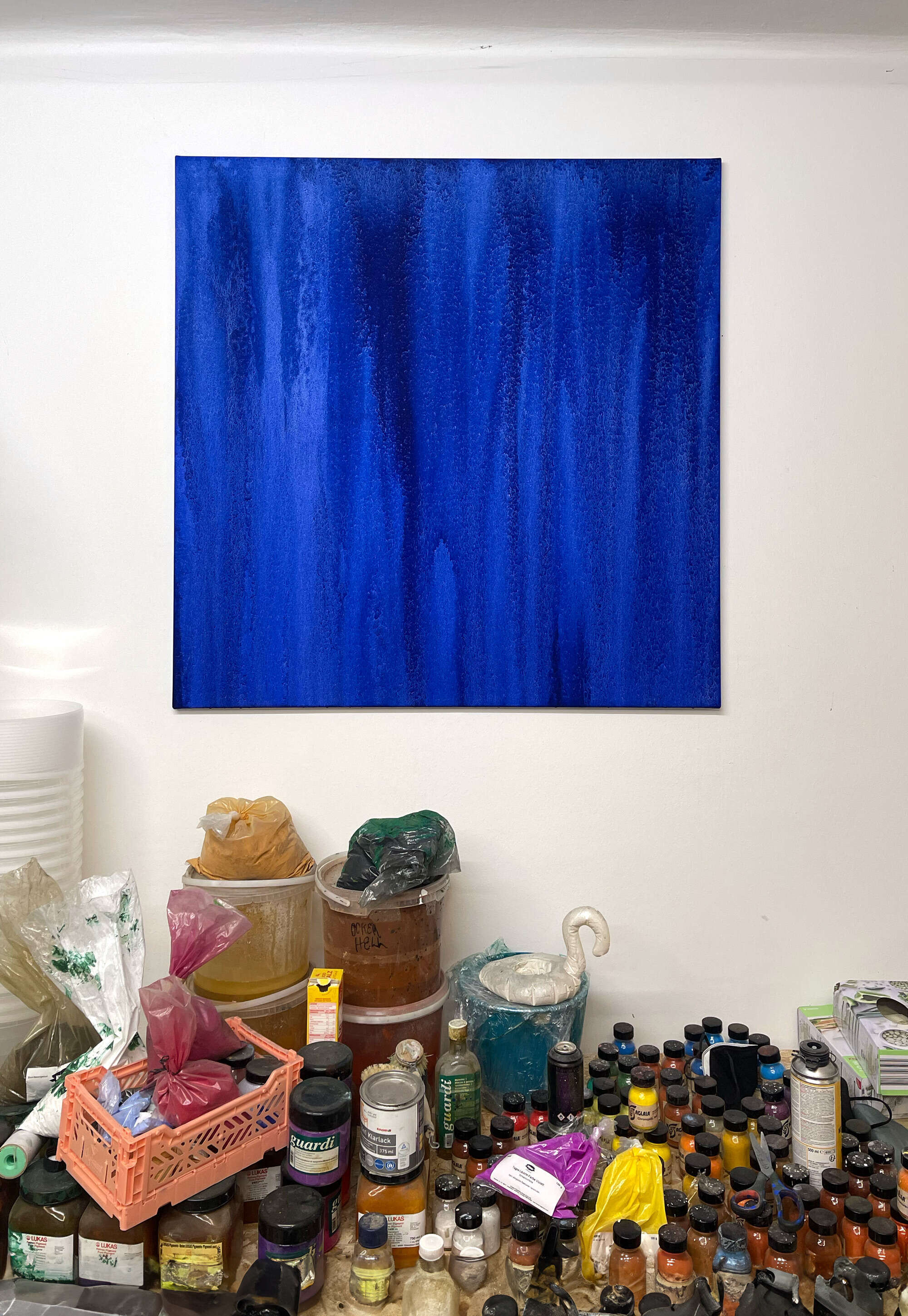
In this work, the blue does not stand out merely as a choice of colour, but as an event that fills the space. The entire square surface is permeated by an intense, deeply saturated hue, which is organised into vertical bands, thereby forming a multi-layered, almost crystalline texture. What initially appears as a monochrome unity reveals, on closer inspection, a nuanced internal structure of denser areas, lighter patches and the finest of transitions.
The painterly execution is based on a fluid process in which heavily diluted acrylic pigments are poured in several successive layers onto the horizontally positioned canvas. The paint is left to the forces of gravity, without the process being left to mere chance. Rather, the specific dramatic structure of the vertical zones arises from a precise interplay of control and release. The direction, intensity and saturation of the runs are the result of conscious decisions, whilst their fine ramifications and fraying develop during the process itself.
The surface bears clear traces of this process: rivulets, delicate efflorescences, granular deposits and gentle transitions between light-permeable areas and darker concentrations. In some places, the blue seems almost to glow; in others, it retreats into deeper, shadowy areas. This creates a pictorial space that is not constructed illusionistically, but unfolds from the materiality of the paint itself.
Here, the blue functions as an atmospheric state, as a field of density and depth that embodies both tranquillity and inner movement. It evokes associations with water, night or the distance, without ever being pinned down to a specific motif. The vertical structure lends the painting a quiet grandeur; it brings to mind curtains, rain or tectonic formations – yet all this remains suggestion, not representation.
The reduction to monochrome brings about a condensation of perception. The work dispenses with representational references and directs the viewer’s gaze towards the relationship between light and pigment, between surface and space. It calls for a slower form of contemplation, in which the apparent unity dissolves into a multitude of subtle differences.
Thus, ‘Shadow Blue’ becomes a resonant space [sound space] of vision. The picture does not depict anything – it unfolds in the very act of perception itself. Between depth and surface, movement and stillness, a state of concentrated presence unfolds, which captivates the eye whilst simultaneously releasing it into the vastness.
Konstantin Lischkoff-Knecht
Mr Knecht studied Fine Art at the Academy of Fine Arts in Munich from 2012 to 2020, under Günther Förg and Jorinde Voigt.
Knecht also took part in Anne Imhof’s project class and engaged in lively exchanges with various lecturers and students at the Academy.
Artist Statement
My artistic journey is deeply rooted in Abstract Expressionism, a style characterised by spontaneous, emotional and unbridled forms of expression. The works of pioneers such as Mark Rothko and Willem de Kooning, as well as artists like Cy Twombly and Georg Baselitz, have significantly shaped my understanding and appreciation of the raw, immediate power of colour and form.
In my paintings, I strive to explore the boundaries of visual language and to convey the emotions and thoughts that move me onto the canvas. Abstract Expressionism offers me the freedom to express myself beyond traditional forms and conventions. This style allows me to experiment with colours, textures and compositions to create a deep and often intuitive resonance.
For me, every canvas is a slaughtering block upon which I come to terms with inner conflicts, feelings and thoughts. The movement of the brush, the flow of paint and the bold gestures reflect the intensity and spontaneity that lie at the heart of my work. The factor of time plays a very intimate role in the creative process: For me, the flow of paint and the resulting emergence of the image represent the passing of the states of my inner life as they are immediately experienced. This process is ultimately concealed from the viewer – the viewer is presented only with the outcome of my process. Through this unfiltered form of artistic expression, I strive to draw viewers into a world of emotion that is as subjective and multi-layered as human experience itself.
Abstract Expressionism has provided me not only with a stylistic framework, but also with a philosophical foundation. It reminds me that art should not merely be viewed, but experienced – it should create a direct and often personal connection between the work and the viewer.
Exhibitions (selection):
2015 Polish Institute Platan / Latarka Gallery (Budapest)
2015 Salon Kennedy (Frankfurt)
2015 Kunstverein Wiesbaden (Wiesbaden)
2016 Catholic Academy Munich (Munich)
2017 Lothringer 13 (Munich)
2017 Art Homes (Munich)
2018 Kunstarkaden (Munich)
2018 Haus 10 (Fürstenfeldbruck)
2023 Kunstarkaden (Munich)
2024 Kunstpavillon (Munich)