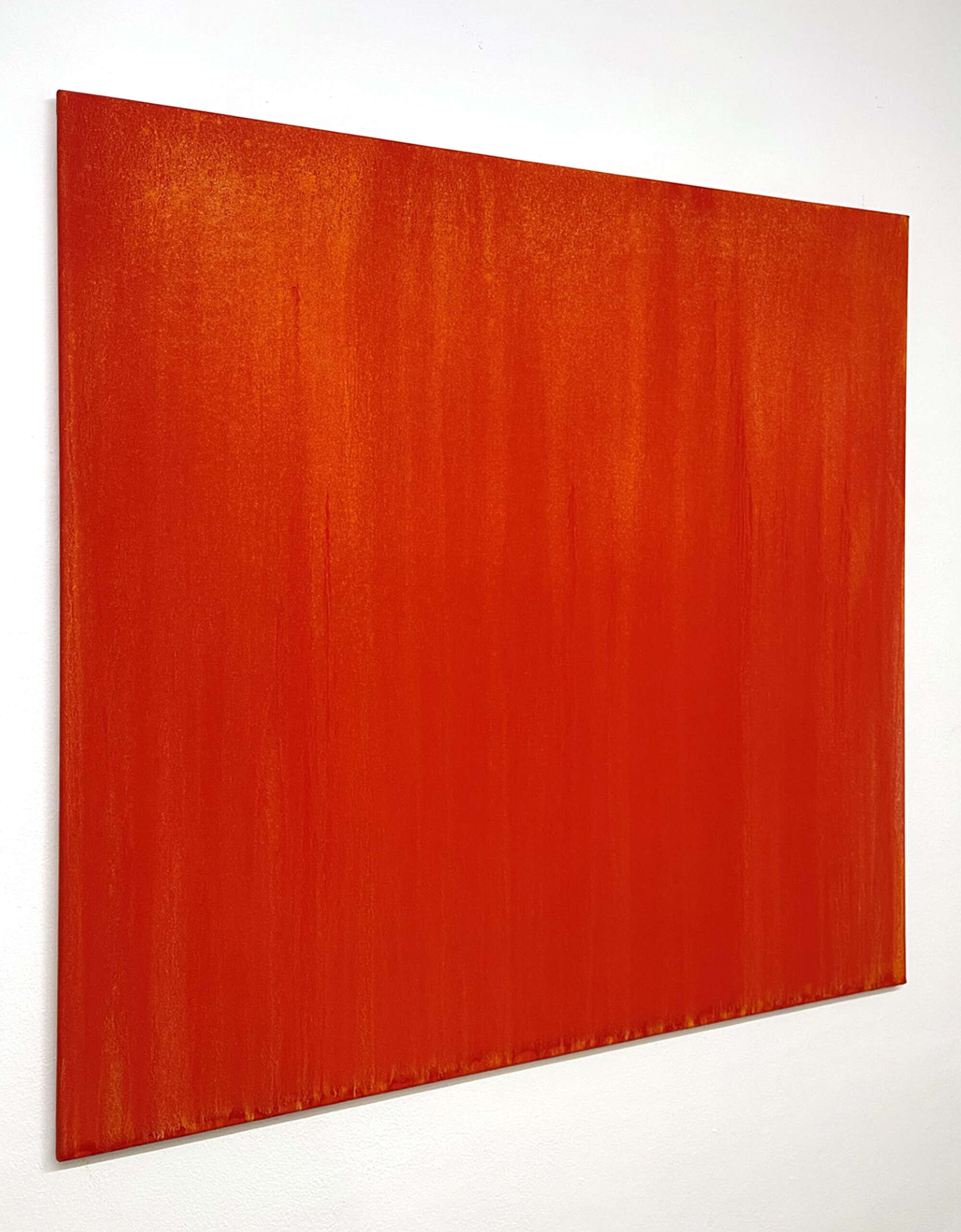
Sediment der Wärme
| Edition | Original Art |
|---|---|
| Sujet | Mythology and Symbolism |
| Technique | Painting – Acrylic on Canvas |
| Height | 100 cm |
| Width | 100 cm |
| Length/Depth | 2.5 cm |
100 x 100 cm
Acrylic on canvas
2026
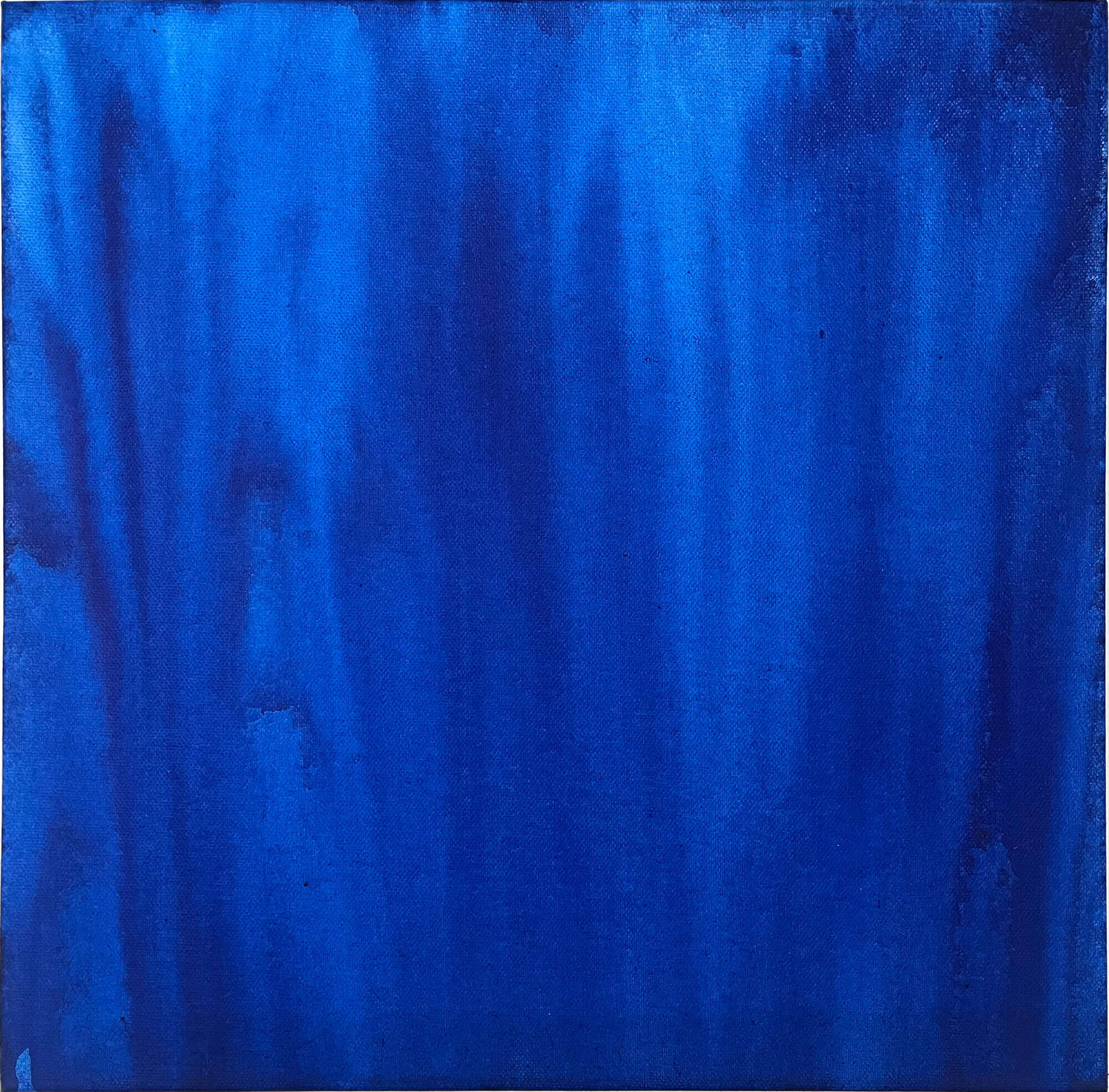
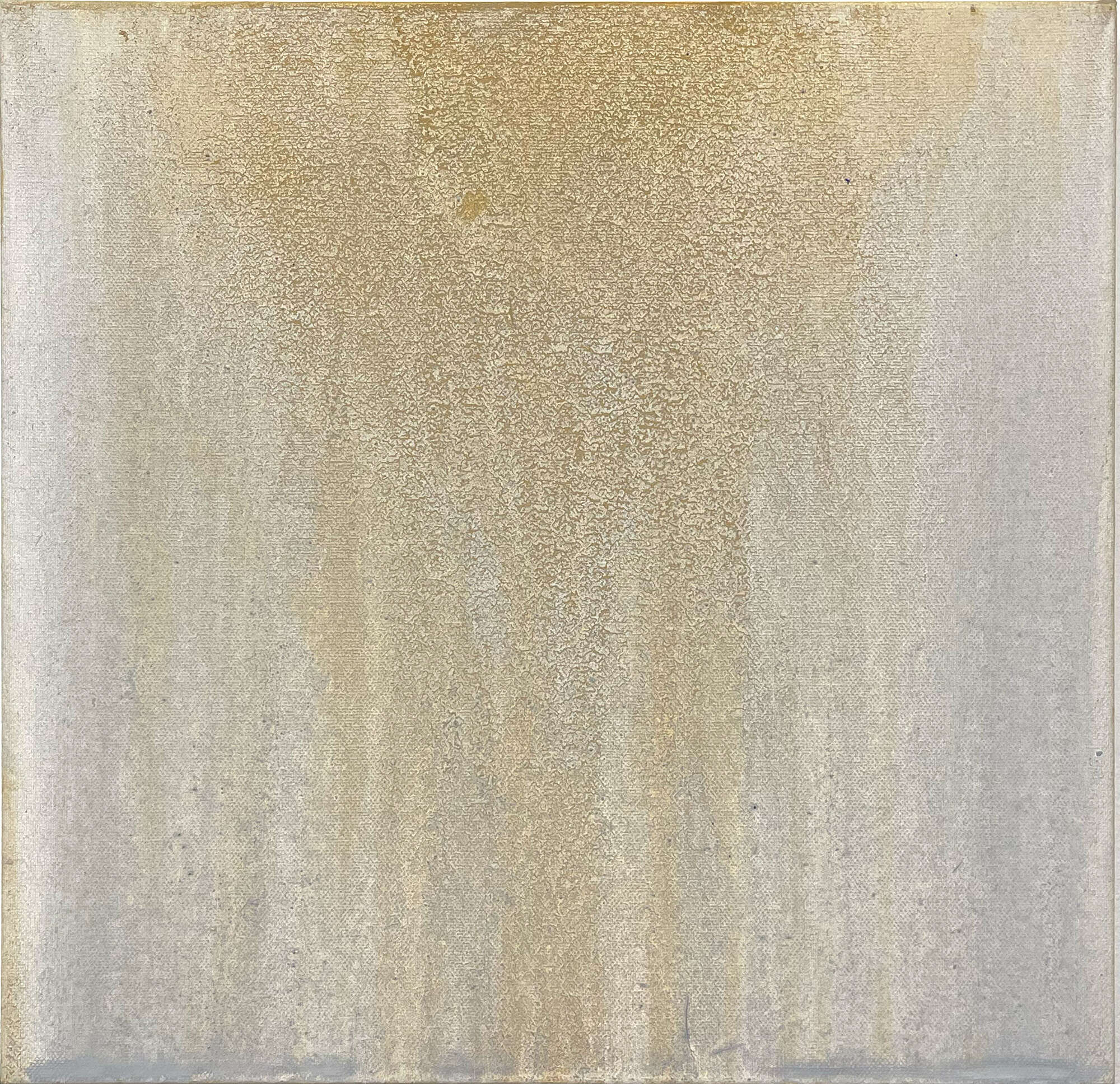
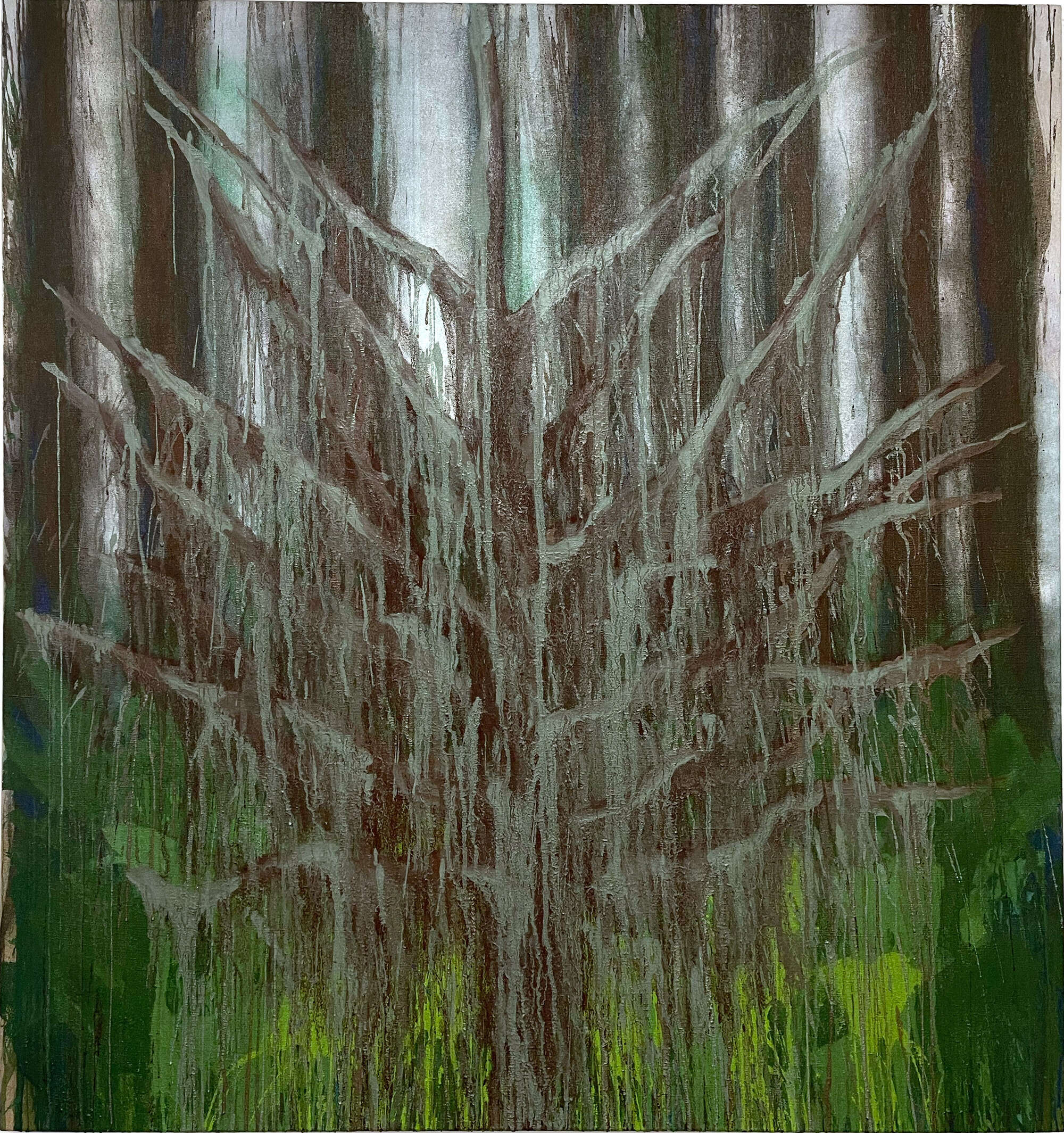
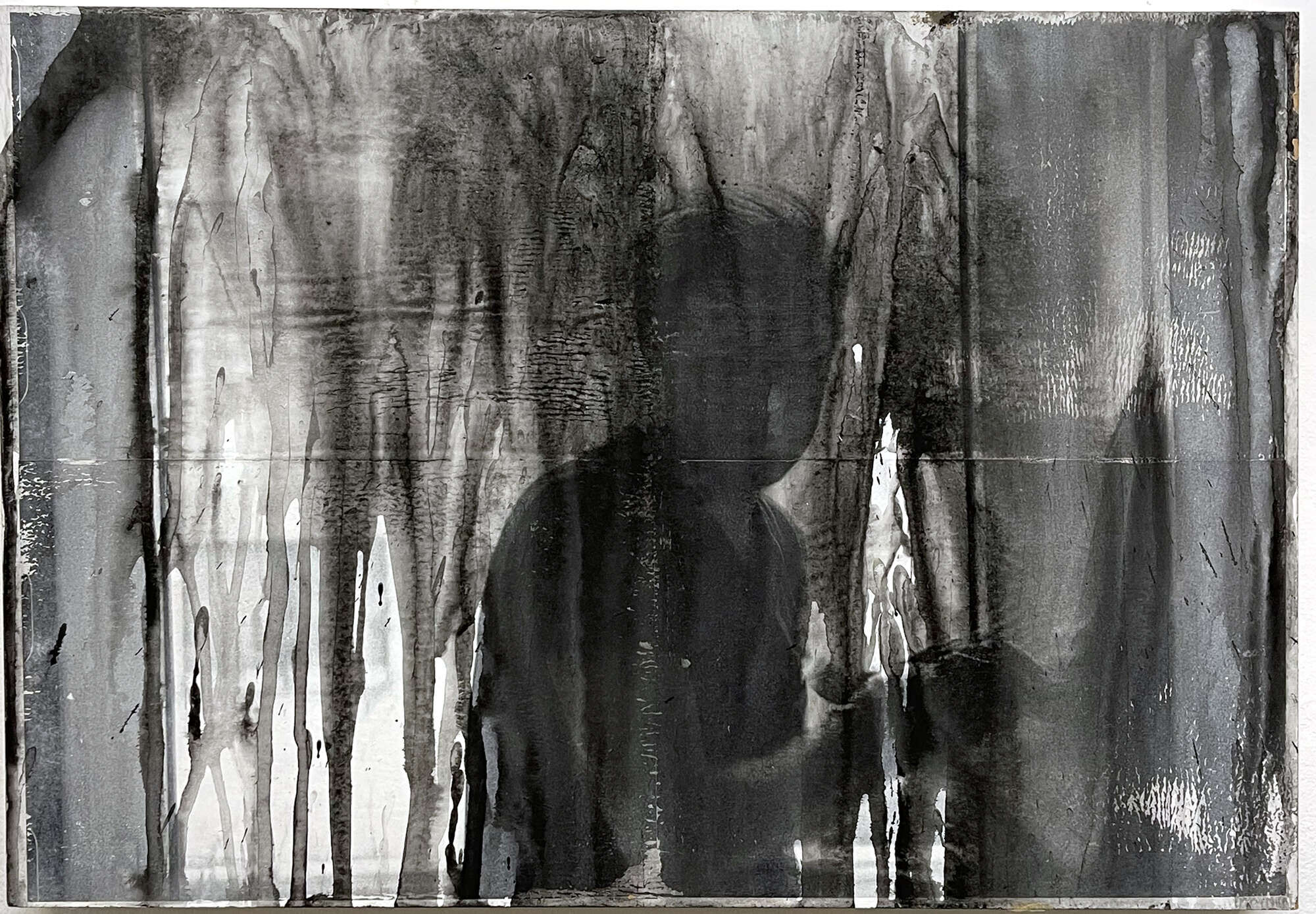
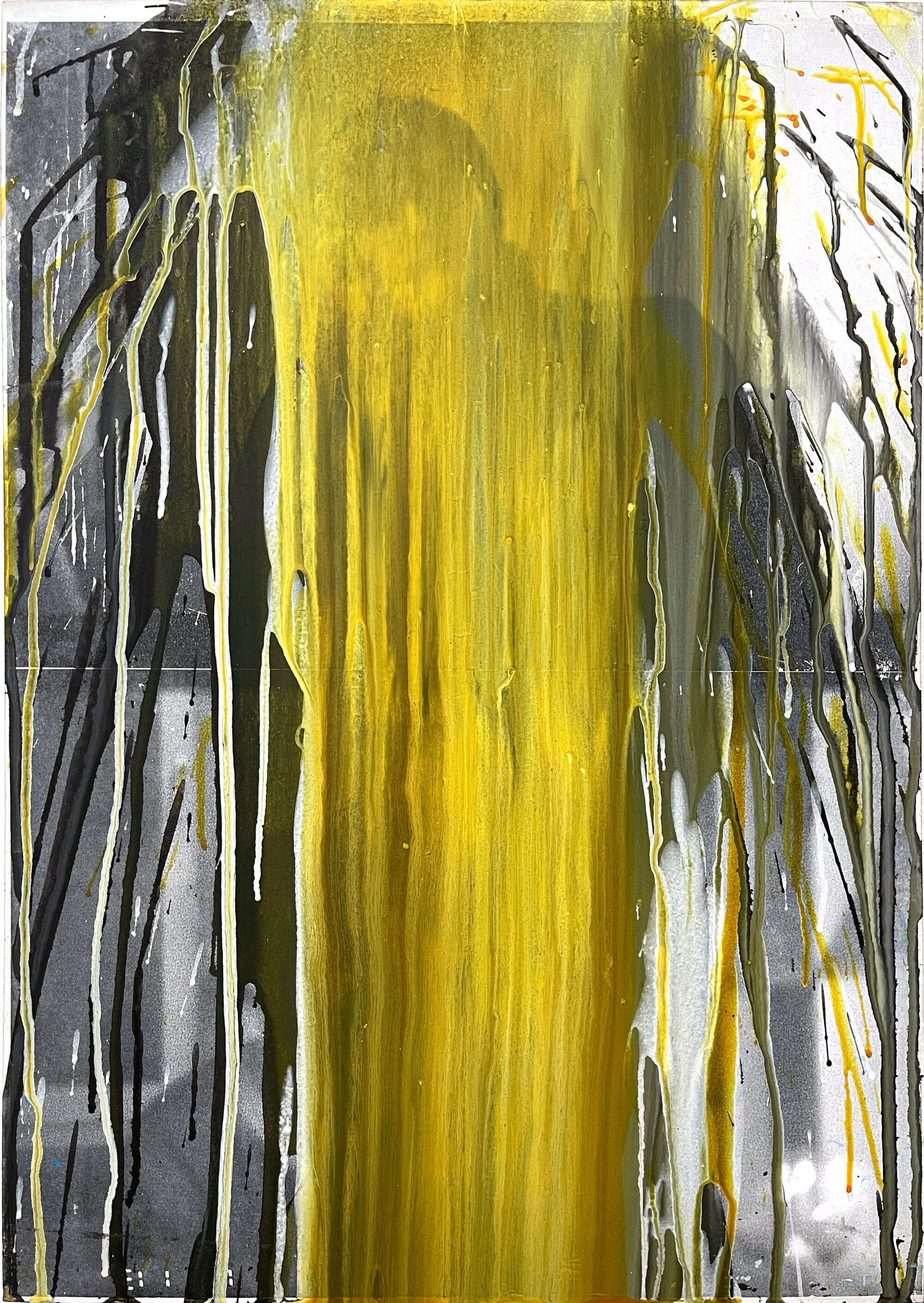
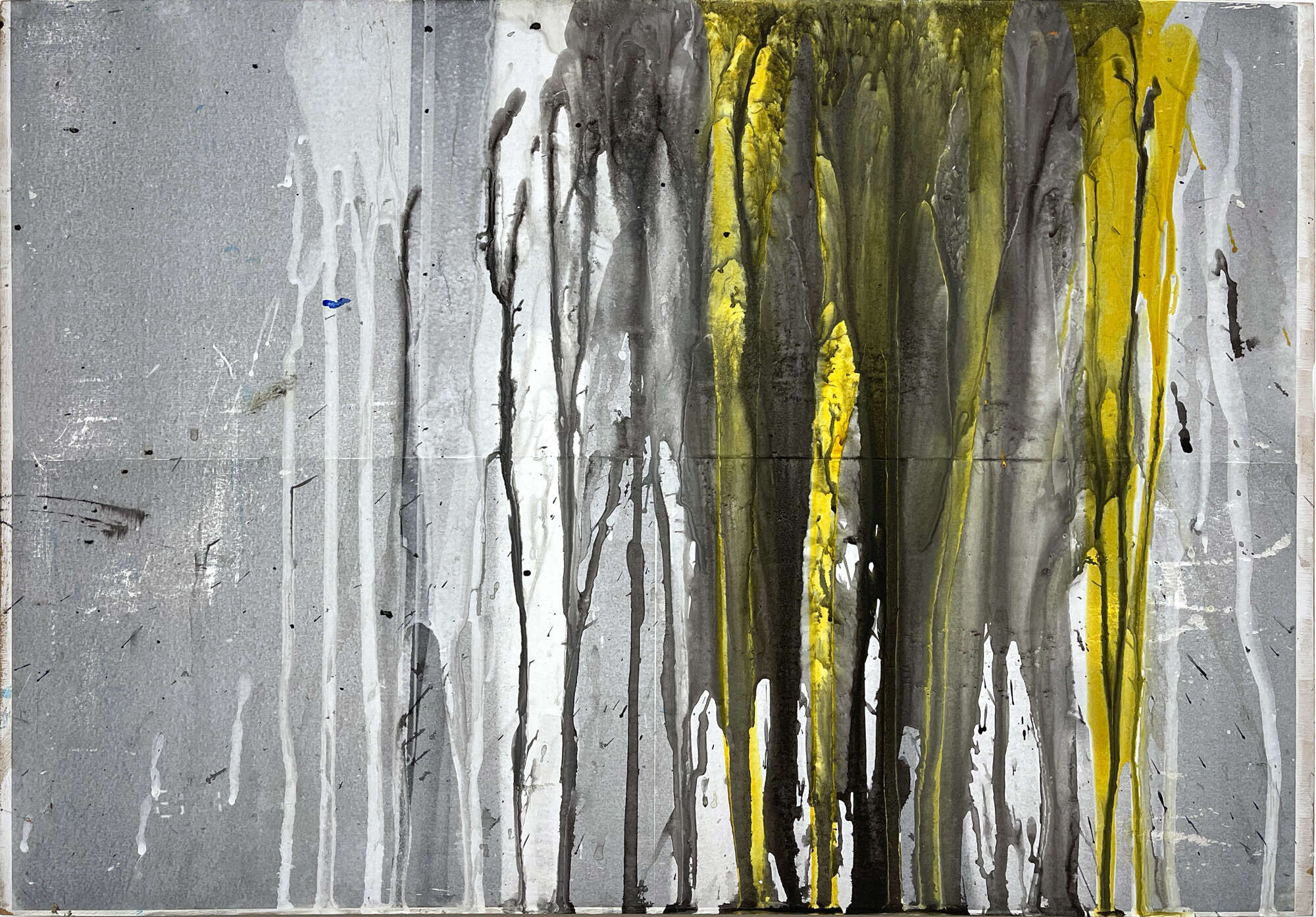
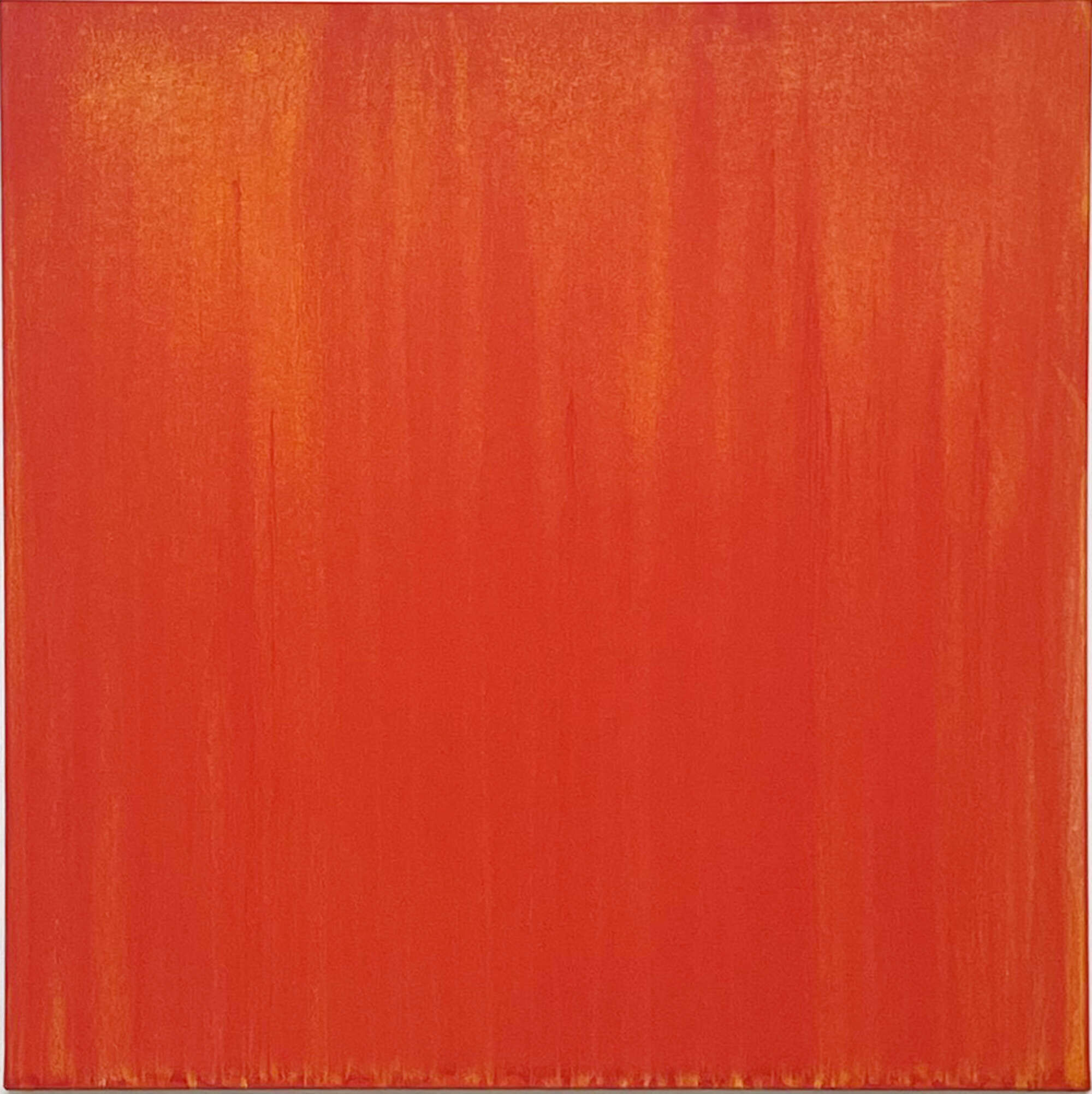
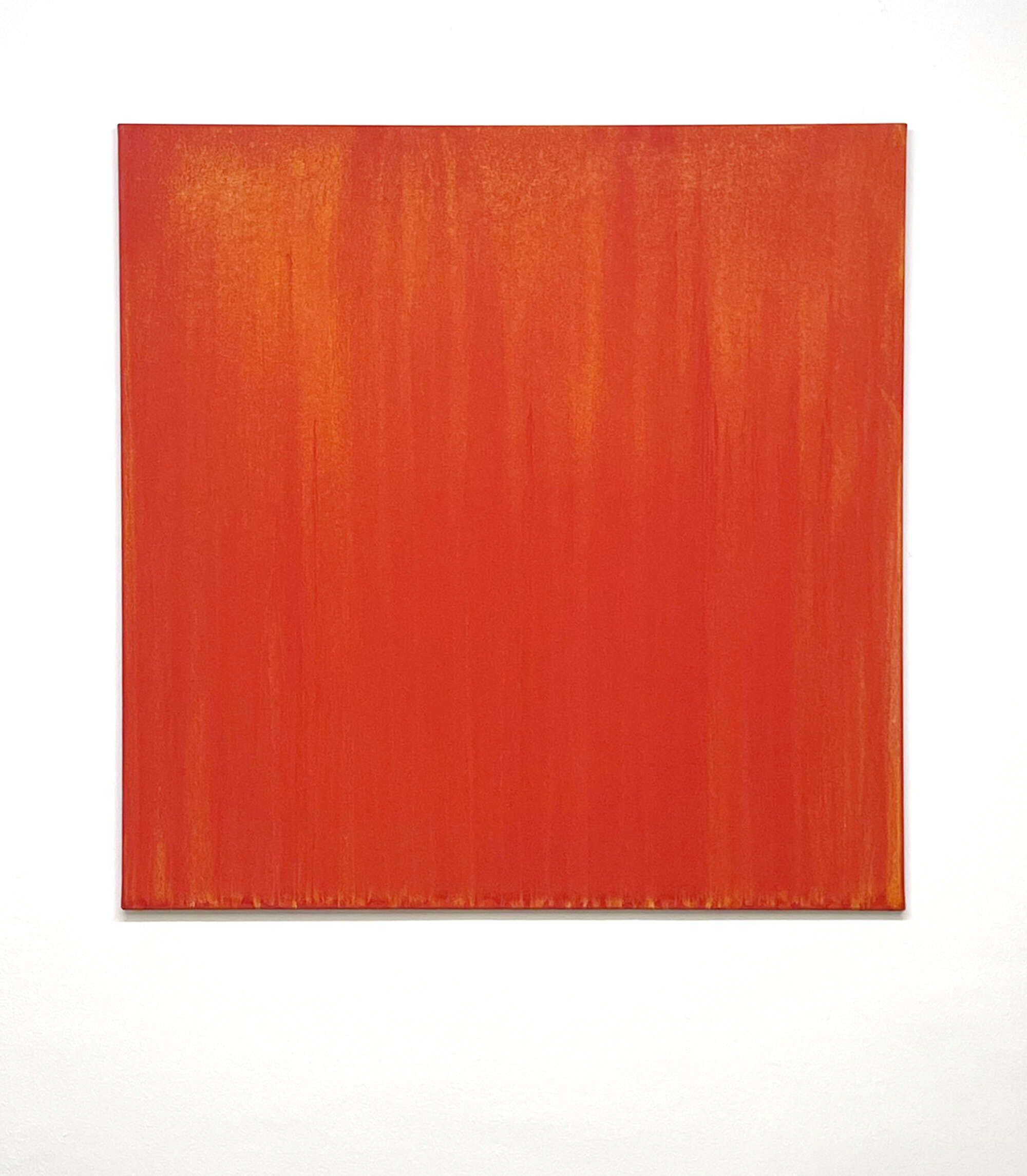
This work concentrates the impact of colour within a small, almost intimate format. The square canvas is permeated by a luminous red-orange that oscillates between glowing warmth and quiet depth. Despite its monochrome appearance, the surface is rich in nuances: areas of greater density, lighter patches and fine vertical traces run through the painting, lending it an inner movement that only gradually reveals itself.
The work is based on a pouring and dripping technique developed by the artist. Highly diluted acrylic pigments are applied to the canvas in numerous translucent layers and left to the influence of gravity. The paint is not merely applied, but observed and guided as it flows. Whilst the artist determines the conditions of the process, the specific patterns emerge through the interplay of material, time and gravity. The painting is thus not merely the result of an action, but a testimony to an event.
The fine vertical streaks that run across the surface are reminiscent of traces of rain, light or time set in stone. They lend the monochrome surface a spatial depth that is not created illusionistically, but emerges from the material itself. The colour seems to dissolve and, at the same time, to condense, creating an atmosphere that appears both physical and immaterial.
Gravity plays a particularly significant role here. It is not merely a technical factor, but a conceptual component of the work. The painting reveals how natural forces contribute to its creation. The flowing movements document a process that cannot be fully controlled and which, precisely for this reason, gains its own aesthetic autonomy. Painting becomes a form of collaboration between the artist’s intention and the laws governing matter.
In contrast to large-format works, the smaller format unfolds a concentrated intensity. The viewer does not encounter the work as an overwhelming expanse of colour, but experiences it at close quarters. As a result, the subtle transitions and delicate surface textures take on greater significance. The eye begins to perceive differences within the seemingly uniform colour and to trace the traces of its creation.
In this way, the work opens up a space for contemplative experience. It tells no story and depicts nothing; rather, it makes a process visible. Colour appears here not as a means of representation, but as an event in its own right – as a condensation of time, movement and perception within a single, luminous pictorial surface.
Konstantin Lischkoff-Knecht
Mr Knecht studied Fine Art at the Academy of Fine Arts in Munich from 2012 to 2020, under Günther Förg and Jorinde Voigt.
Knecht also took part in Anne Imhof’s project class and engaged in lively exchanges with various lecturers and students at the Academy.
Artist Statement
My artistic journey is deeply rooted in Abstract Expressionism, a style characterised by spontaneous, emotional and unbridled forms of expression. The works of pioneers such as Mark Rothko and Willem de Kooning, as well as artists like Cy Twombly and Georg Baselitz, have significantly shaped my understanding and appreciation of the raw, immediate power of colour and form.
In my paintings, I strive to explore the boundaries of visual language and to convey the emotions and thoughts that move me onto the canvas. Abstract Expressionism offers me the freedom to express myself beyond traditional forms and conventions. This style allows me to experiment with colours, textures and compositions to create a deep and often intuitive resonance.
For me, every canvas is a slaughtering block upon which I come to terms with inner conflicts, feelings and thoughts. The movement of the brush, the flow of paint and the bold gestures reflect the intensity and spontaneity that lie at the heart of my work. The factor of time plays a very intimate role in the creative process: For me, the flow of paint and the resulting emergence of the image represent the passing of the states of my inner life as they are immediately experienced. This process is ultimately concealed from the viewer – the viewer is presented only with the outcome of my process. Through this unfiltered form of artistic expression, I strive to draw viewers into a world of emotion that is as subjective and multi-layered as human experience itself.
Abstract Expressionism has provided me not only with a stylistic framework, but also with a philosophical foundation. It reminds me that art should not merely be viewed, but experienced – it should create a direct and often personal connection between the work and the viewer.
Exhibitions (selection):
2015 Polish Institute Platan / Latarka Gallery (Budapest)
2015 Salon Kennedy (Frankfurt)
2015 Kunstverein Wiesbaden (Wiesbaden)
2016 Catholic Academy Munich (Munich)
2017 Lothringer 13 (Munich)
2017 Art Homes (Munich)
2018 Kunstarkaden (Munich)
2018 Haus 10 (Fürstenfeldbruck)
2023 Kunstarkaden (Munich)
2024 Kunstpavillon (Munich)