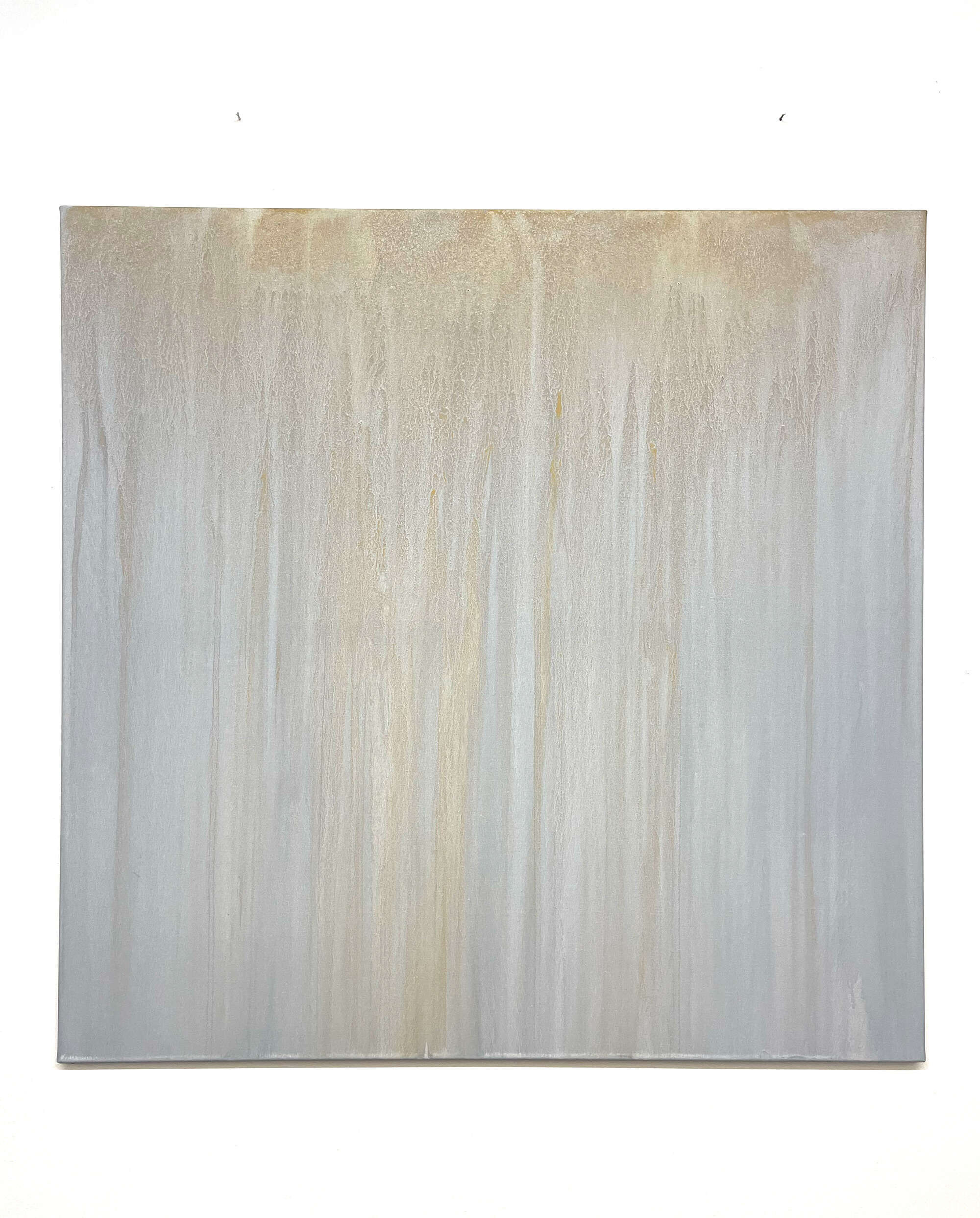
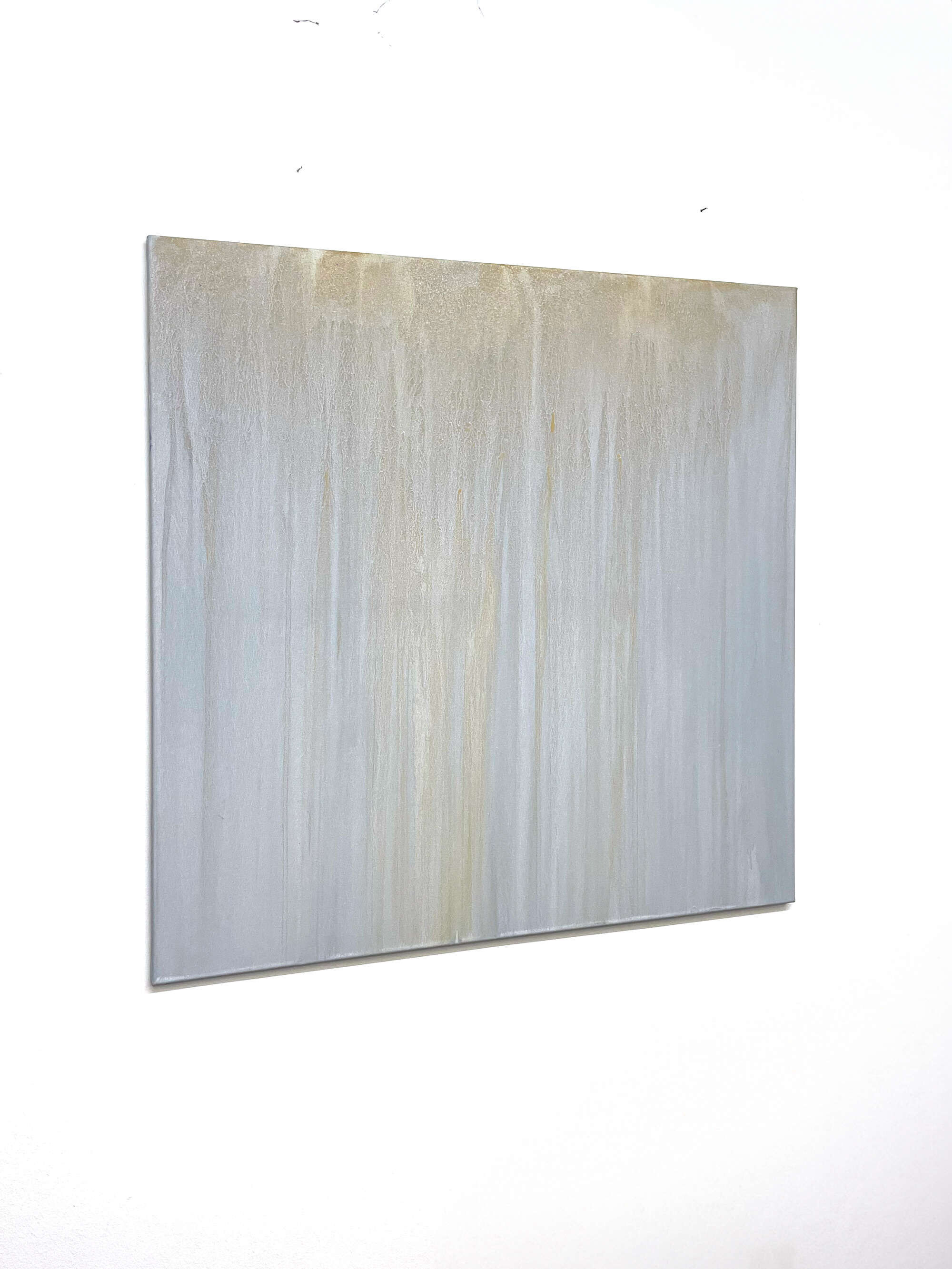
Schweigende Sedimente
| Edition | Original Art |
|---|---|
| Sujet | Narrative Art |
| Technique | Painting – Acrylic on Canvas |
| Height | 100 cm |
| Width | 100 cm |
| Length/Depth | 2 cm |
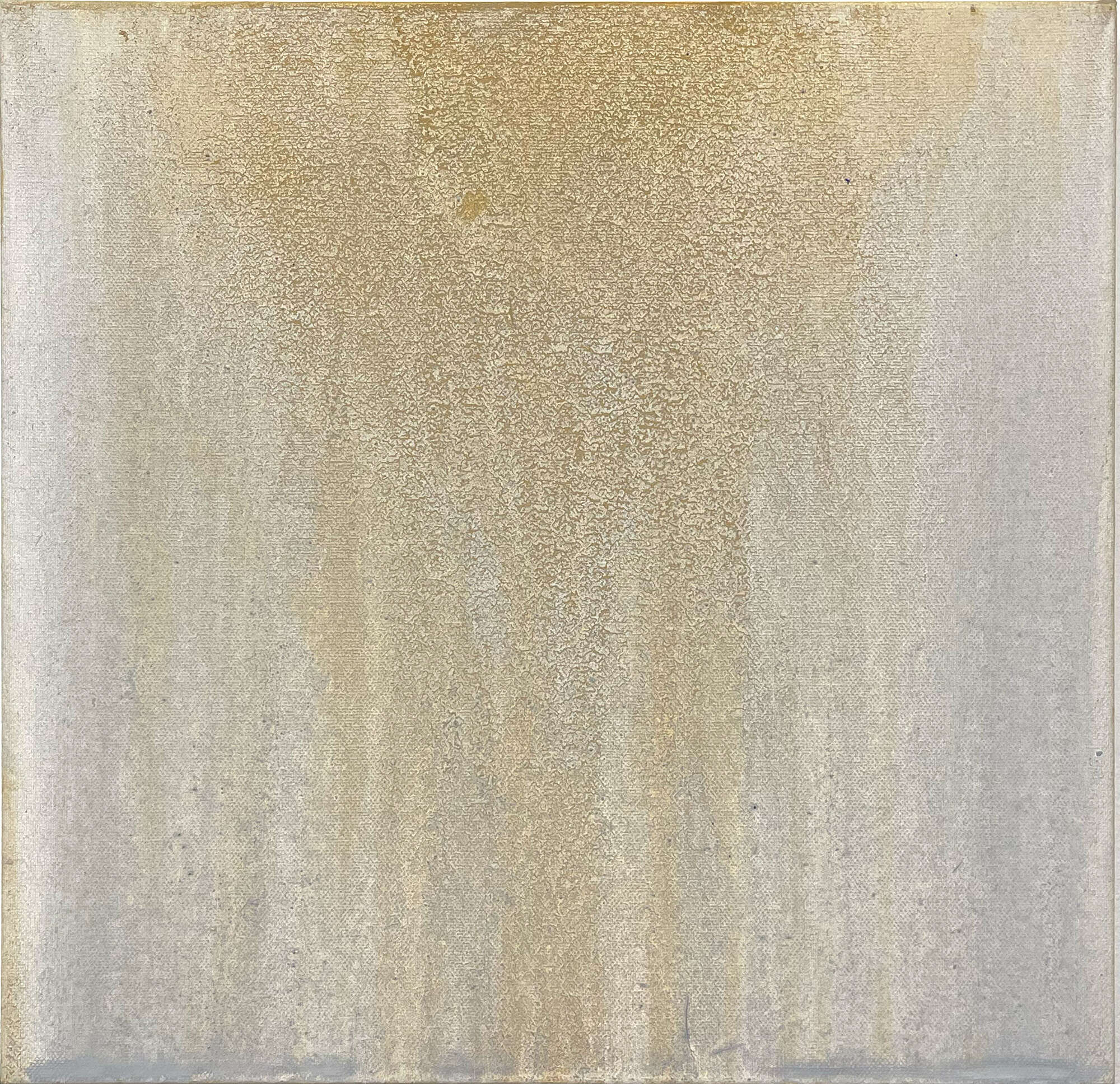
100 x 100 cm
Acrylic on canvas
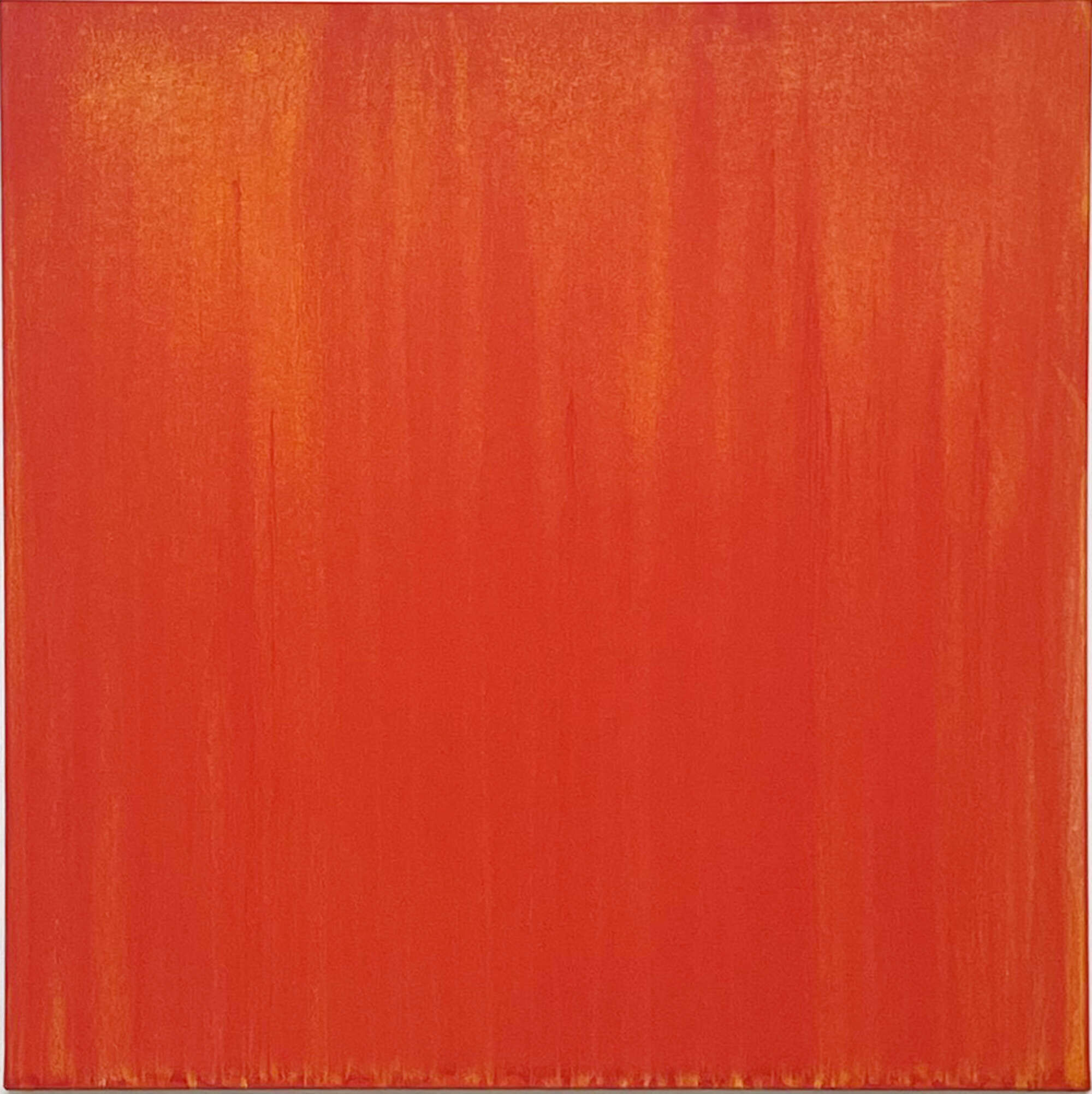
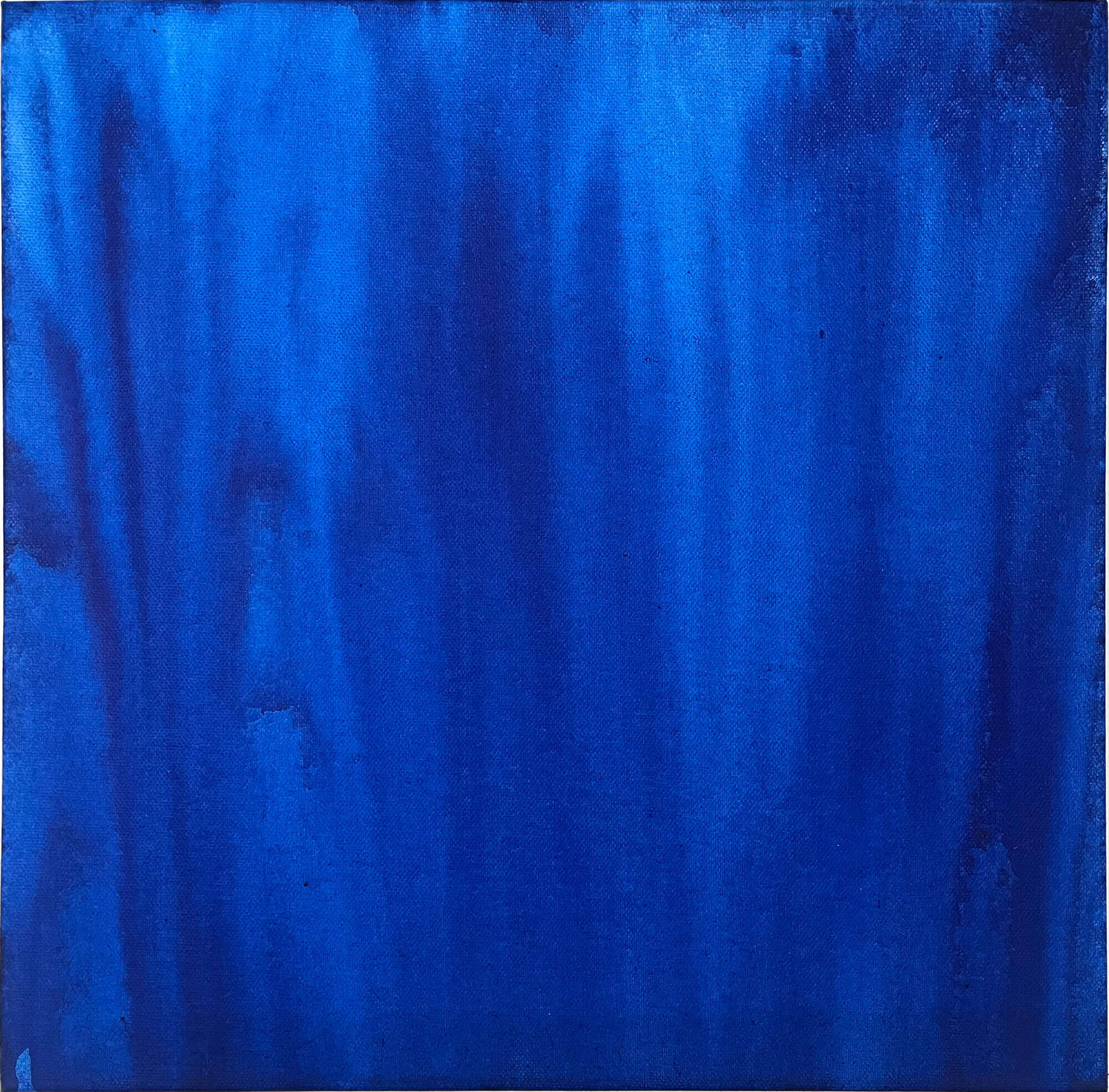
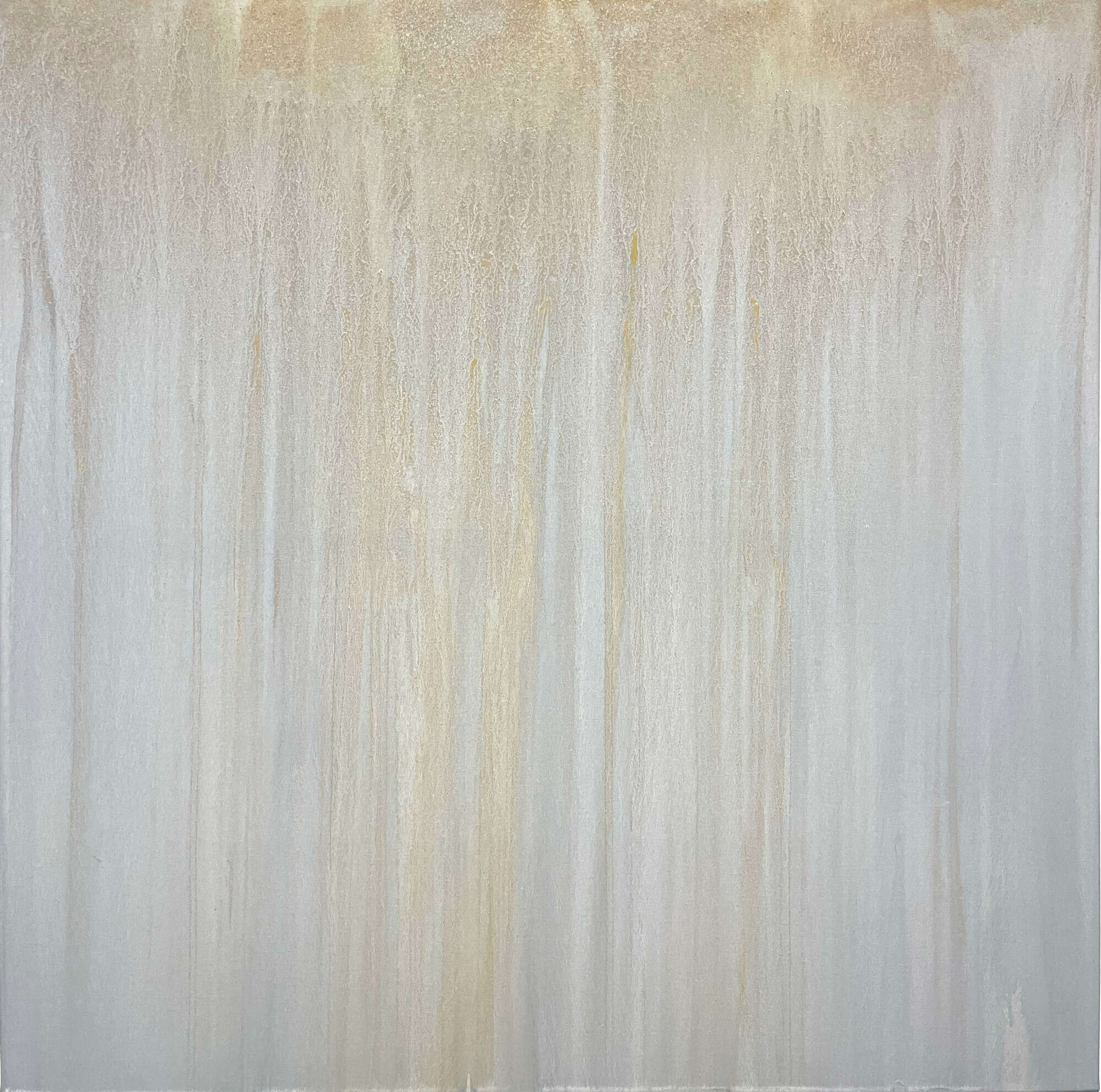
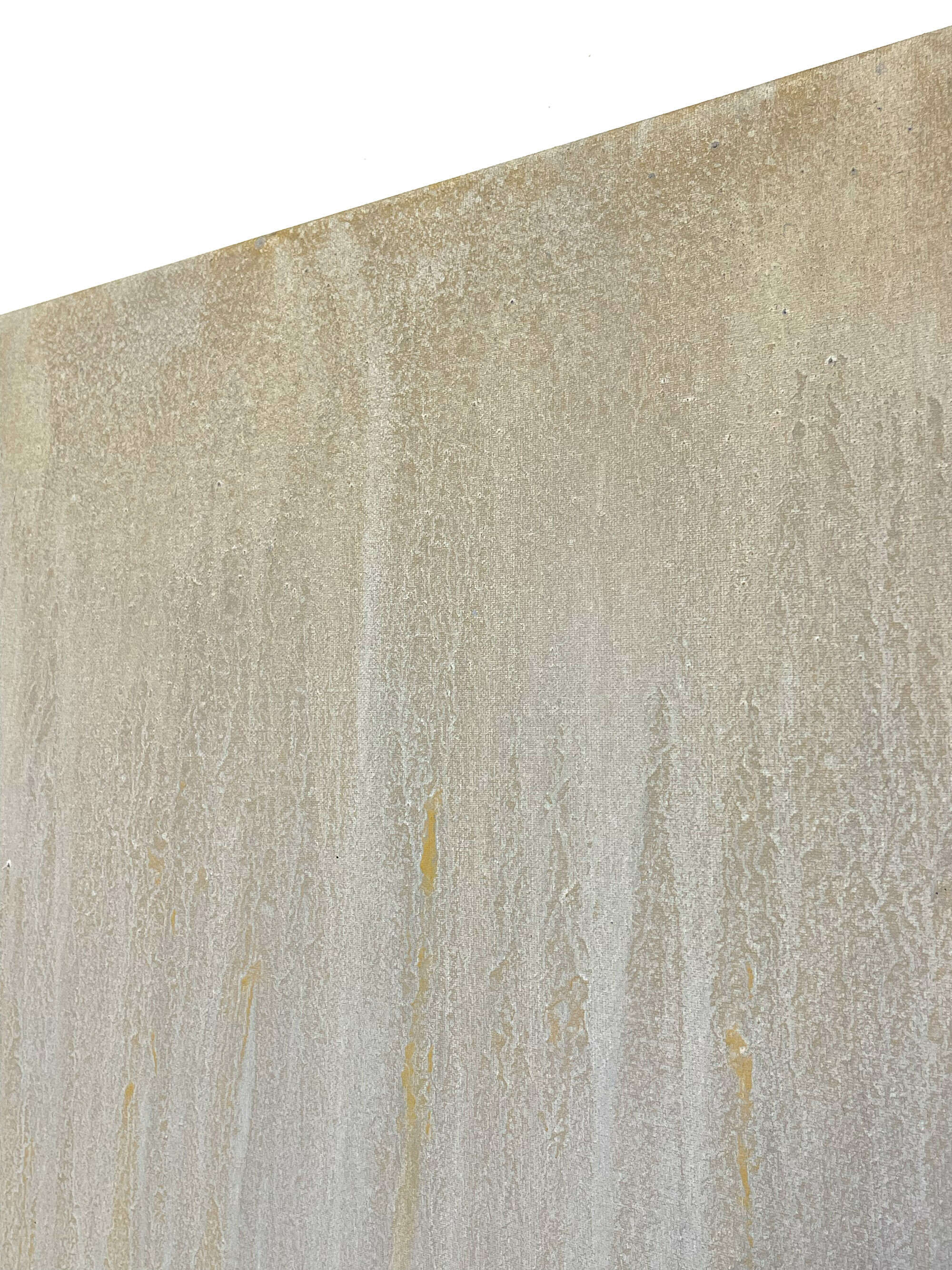
This work derives its impact from a deliberate sense of restraint. In a light, almost dematerialised colour scheme of white, grey and delicate shades of beige, the picture surface initially appears calm, almost frozen in time. Only upon closer inspection does the complexity of the painterly process underlying this seemingly homogeneous appearance become apparent.
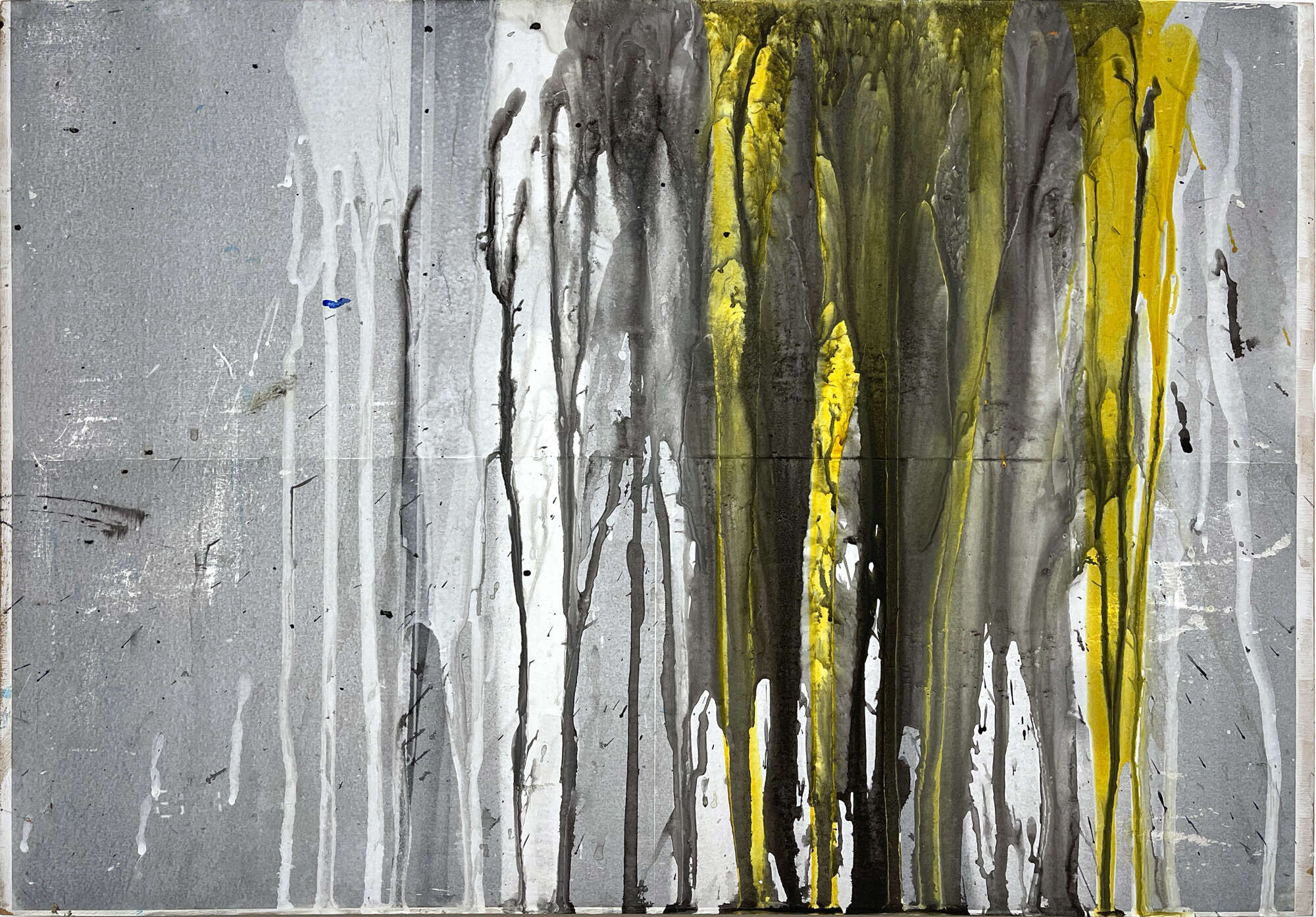
The paint was applied using a fluid technique: heavily diluted layers of paint, reacting with one another, were poured over the horizontally oriented canvas and left to the influence of gravity. This controlled letting go gives rise to vertical streaks, fine striations and gentle accumulations that structure the pictorial space without defining it rigidly. The act of painting is less a matter of imposing than of allowing things to happen – a process in which chance and decision strike a fragile balance.
The surface bears traces of drying, sedimentation and slow seepage. Slight irregularities, subtle transitions and barely perceptible breaks run through the picture like memories of movements that have already passed. Nothing pushes itself into the foreground; instead, an open pictorial depth emerges that appears atmospheric rather than illusionistic.
In terms of content, the work navigates the tension between presence and absence. The reduction in colour and the dissolution of clear forms point to states of transition: between visibility and disappearance, between materiality and dissolution. The vertical traces can be read as imprints of time – as visual records of a process that is not aimed at a pictorial motif, but at experience.
The large-format square reinforces this effect. It confronts the viewer not with an object, but with a situation: a quiet, concentrated pictorial space that opens up scope for projection and contemplative perception. The work does not call for a quick reading, but rather a slowed-down contemplation in which meaning does not reveal itself immediately, but gradually settles.
In this way, the image becomes a place of contemplation. It resists narrative definitions and instead asserts a poetic openness in which perception, time and material engage in a quiet yet enduring dialogue.
Konstantin Lischkoff-Knecht
Mr Knecht studied Fine Art at the Academy of Fine Arts in Munich from 2012 to 2020, under Günther Förg and Jorinde Voigt.
Knecht also took part in Anne Imhof’s project class and engaged in lively exchanges with various lecturers and students at the Academy.
Artist Statement
My artistic journey is deeply rooted in Abstract Expressionism, a style characterised by spontaneous, emotional and unbridled forms of expression. The works of pioneers such as Mark Rothko and Willem de Kooning, as well as artists like Cy Twombly and Georg Baselitz, have significantly shaped my understanding and appreciation of the raw, immediate power of colour and form.
In my paintings, I strive to explore the boundaries of visual language and to convey the emotions and thoughts that move me onto the canvas. Abstract Expressionism offers me the freedom to express myself beyond traditional forms and conventions. This style allows me to experiment with colours, textures and compositions to create a deep and often intuitive resonance.
For me, every canvas is a slaughtering block upon which I come to terms with inner conflicts, feelings and thoughts. The movement of the brush, the flow of paint and the bold gestures reflect the intensity and spontaneity that lie at the heart of my work. The factor of time plays a very intimate role in the creative process: For me, the flow of paint and the resulting emergence of the image represent the passing of the states of my inner life as they are immediately experienced. This process is ultimately concealed from the viewer – the viewer is presented only with the outcome of my process. Through this unfiltered form of artistic expression, I strive to draw viewers into a world of emotion that is as subjective and multi-layered as human experience itself.
Abstract Expressionism has provided me not only with a stylistic framework, but also with a philosophical foundation. It reminds me that art should not merely be viewed, but experienced – it should create a direct and often personal connection between the work and the viewer.
Exhibitions (selection):
2015 Polish Institute Platan / Latarka Gallery (Budapest)
2015 Salon Kennedy (Frankfurt)
2015 Kunstverein Wiesbaden (Wiesbaden)
2016 Catholic Academy Munich (Munich)
2017 Lothringer 13 (Munich)
2017 Art Homes (Munich)
2018 Kunstarkaden (Munich)
2018 Haus 10 (Fürstenfeldbruck)
2023 Kunstarkaden (Munich)
2024 Kunstpavillon (Munich)