


by Evelina
Status: 11.08.2026
Who decides what constitutes art?
Key points at a glance
- Art is ever-changing: what is considered art is constantly being redefined by society.
- A break with tradition: Courbet challenged academic rules of art, whilst Duchamp revolutionised the concept of art with *Fountain* (1917) through the use of the readymade.
- Institutions create recognition: museums, galleries and art colleges play a part in determining which works become visible and relevant.
- Art is shaped by power: historically, women and marginalised artists have often been excluded or overlooked. The art market influences
- visibility: galleries, collectors and auction houses shape the value and significance of art.
- New art forms are broadening the concept: digital art, performances and AI are challenging traditional notions.
When does an object become art? Is it enough for an artist to label it as art? Must a museum exhibit it? Does it require an audience that perceives it as art? Or does the market ultimately decide?
A look at art history shows that the boundaries of what counts as art have been constantly redrawn. The fact that something is regarded as a work of art is by no means historical constant, but is subject to the changes of the times. Art is therefore not only the result of individual creativity, but also the outcome of societal decisions about what is visible, aesthetically pleasing, worthy of collection and worthy of remembrance.


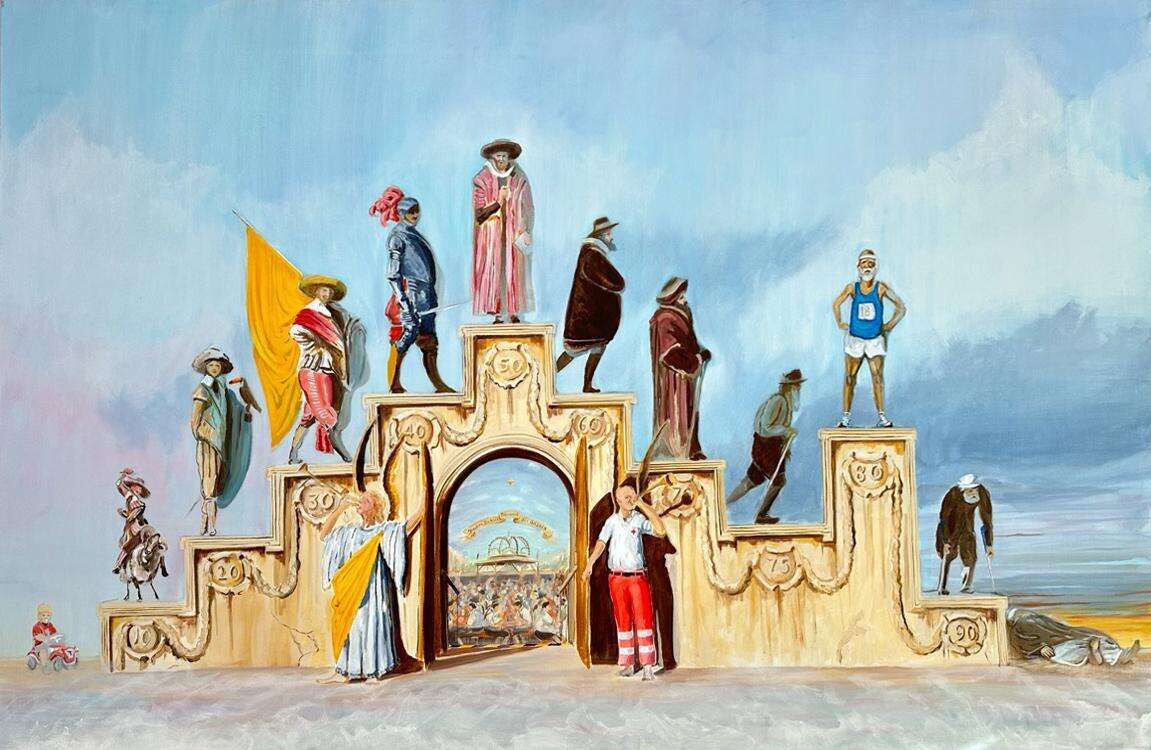

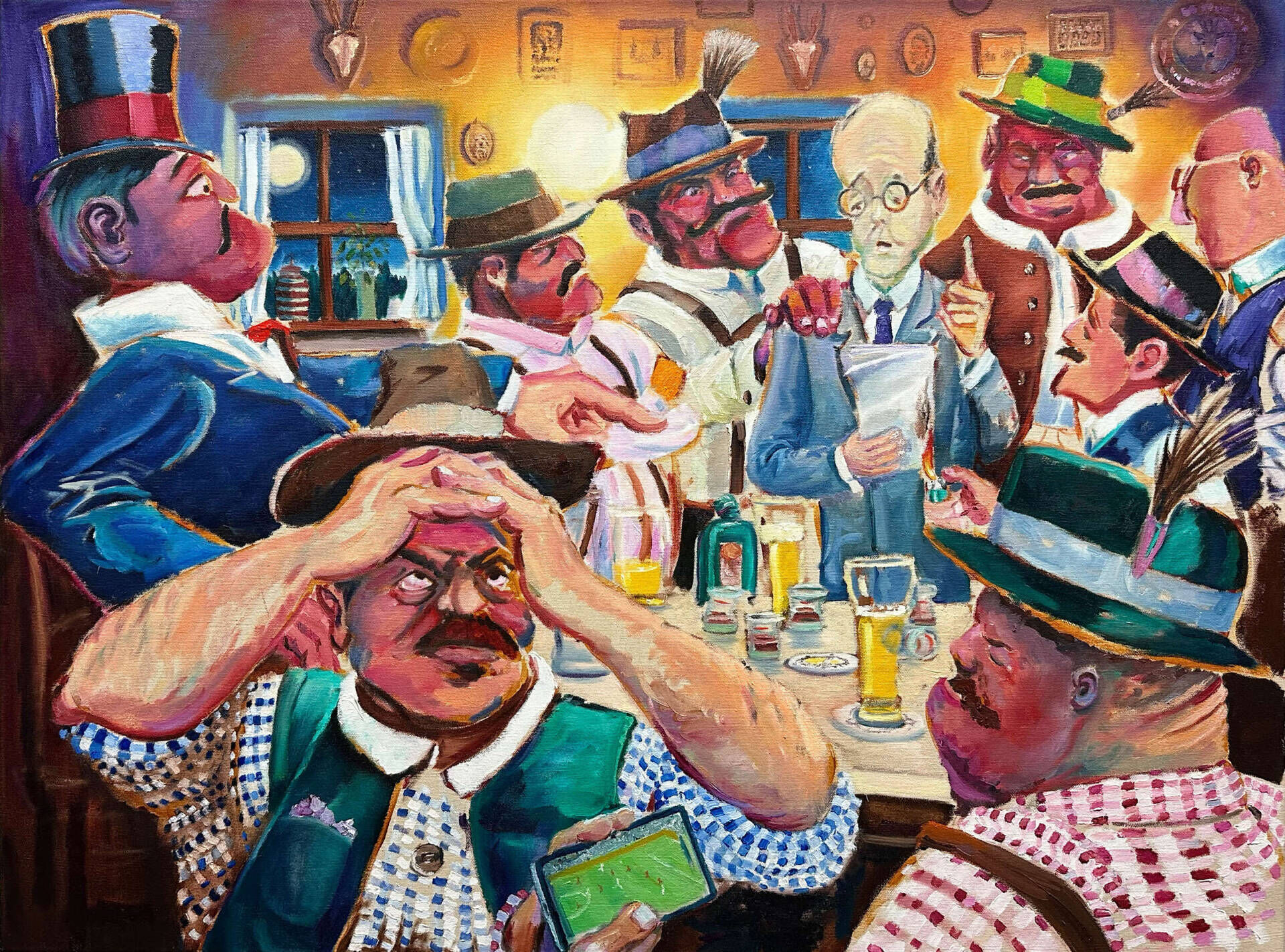


From the Academy to the Readymade and Modern Art
For a long time, there were relatively clear rules governing what could be considered art and who was permitted to produce it. In European art history, painting, sculpture and architecture were tied to specific technical skills and institutional structures. Artists worked on commission for the Church, the court or wealthy families, and operated within established notions of beauty, function and quality. Training, too, followed fixed rules. The academies determined which techniques had to be mastered and which subjects were regarded as particularly demanding. The so-called hierarchy of genres placed, for example, history painting above portraiture, landscape and still life. What constituted art was therefore not decided by the artist alone, but by an entire system comprising patrons, institutions and societal expectations.
In the 19th century, this system began to change. Artists such as Gustave Courbet rebelled against the academic notions of which subjects were worthy of being depicted in art. Instead of mythological or historical scenes, Courbet painted workers, peasants and everyday situations. With his Pavillon du Réalisme in 1855, he deliberately placed himself outside the official exhibition system. The question of what constituted a suitable subject for art thus became itself the subject of artistic debate.
However, it was Marcel Duchamp who brought about what was arguably the most radical break. In 1917, under the pseudonym ‘R. Mutt’, he submitted an industrially manufactured urinal entitled *Fountain* to the exhibition of the Society of Independent Artists in New York. The object had neither been produced by Duchamp nor did it conform to traditional notions of artisanal craftsmanship. What was decisive, rather, was the concept of the readymade: an existing object became a work of art through its artistic presentation and new context. At the same time, *Fountain* demonstrates that this artistic presentation alone does not determine a work’s status as a work of art. Initially rejected by the exhibition committee, the object only became part of art history through a sustained process of recognition.


The key players in visibility
This brings the institutions into the spotlight. Museums, galleries, collections and art colleges are not neutral exhibition venues. Through their curatorial choices, they shape what attracts attention, what is deemed relevant and what is worth preserving. Those represented in major collections are researched, published and promoted. This creates a cycle through which certain artists and works become firmly established in the cultural memory.
This process of selection is particularly evident in the art-historical canon. For centuries, it was primarily European male artists who shaped the narrative of art history, whilst female artists, non-European art and marginalised voices found significantly less representation in collections and research. Female artists such as Artemisia Gentileschi, Camille Claudel and Hilma af Klint were only rediscovered long after their active careers, or their artistic significance was only recognised more fully much later. Modern art also illustrates how such attributions can arise. Jackson Pollock is today regarded as one of the key figures of Abstract Expressionism and became known above all for his ‘drip’ technique, developed from 1947 onwards. However, the artist Janet Sobel had already been working with a comparable ‘all-over’ technique as early as the 1940s. Her works received far less attention, whilst Pollock’s work became a benchmark in art history.
Alongside the institutions, the art market also shapes which artists receive attention. Galleries create visibility; collectors, through their purchases, help determine which works remain in circulation; and auction houses make market values publicly visible. Where institutional recognition and economic success converge, certain works gain visibility and, in the long term, also gain significance. The public is another factor that influences the recognition of art, as its reactions – particularly to provocative or unsettling works – also help shape how these works are perceived.

Contemporary Pluralism
Today, the question of how to define art is more open than ever. Installations, performances, digital works and AI-generated images challenge traditional notions of the artwork, its material and authorship. This brings back a question that was already raised by Duchamp’s *Fountain*: what actually makes a work of art a work of art? There is no single authority that can answer this question. Artists create and define; institutions exhibit and preserve; academia and the market shape how art is categorised; whilst the public plays a part through its reactions. What counts as art is thus constantly being renegotiated. The history of art is therefore also a history of who has the power to make something visible as art.

Anja Edelmann - Her Stockings, Her Eyes – after Courbet
In *Her Stockings, Her Eyes – after Courbet*, Anja Edelmann combines figurative and abstract painting. Drawing on historical pictorial traditions, particularly Gustave Courbet’s *The Origin of the World*, she explores the tension between physicality and abstraction, presence and dissolution, and beauty and transience.

Christopher Schröder- The most expensive painting on Skm
In his work, Christopher Schröder examines the power structures of the art market and the relationship between artistic quality and economic value. He highlights how social networks, status and strategic presentation influence the visibility and pricing of art, thereby raising the question of who actually decides which art receives recognition.

Maximilian Dussmann - your feed
In his installation-based work, Maximilian Dussmann explores the impact and significance of social media. By combining digital imagery with spatial installations, he challenges traditional notions of the artwork, materials and authorship. His work thus explores how digital media are changing our perception of art and enabling new forms of artistic expression.
Frequently Asked Questions
Studierenden Kunstmarkt is the leading platform for student art in the German-speaking world. It enables art enthusiasts and art lovers to buy artworks directly from art students, thereby providing them with financial support whilst they are studying.
Studierenden Kunstmarkt was founded in 2020 by Erich Reich and his brother. Erich is still the managing director of Studierenden Kunstmarkt and, together with his team, has succeeded in creating a platform that brings together art lovers, those interested in art and art students. To this day, Studierenden Kunstmarkt is entirely self-funded and has not received any external funding from investors.
At any given time, there are several hundred art students and several thousand works of art on the Student Art Market. A good place to start if you’re looking for an initial overview of the artists is the ‘Artists of the Month’ section.
Just like normal galleries, Studierenden Kunstmarkt receives a commission on each artwork sold. This funds the running of the platform, its maintenance and the salaries of Studierenden Kunstmarkt’s staff. In addition, we support the students, are on hand to advise on any queries, and run free advertising for them on Instagram, Facebook, Google and in our email newsletter, which has several thousand art lovers as subscribers.
There are many ways you can start investing in young artists on the student art market. One option is to sign up for our free email course, ‘Become an Art Expert in 7 Days’. In it, we’ll share a few basics with you, as well as some of our insider tips on which artists have particular potential. Find out more
Take a look at our most popular artists at the Student Art Market


News banner


