


by Evelina
Status: 09.28.2026
Peggy Guggenheim: A Life in Art
Key facts at a glance
- Peggy Guggenheim was born in 1898 as the heiress to a US fortune. Her life was shrouded in legend from an early age; her father died in 1912 when the Titanic sank.
- In the 1920s, she moved to Paris. There, she came into contact with the avant-garde, met various artists, and Marcel Duchamp became an important mentor to her.
- In 1938, she moved to London and opened the Galerie Guggenheim Jeune there. Under the motto ‘one picture a day’, she began her career as a collector.
- During the war, she returned to New York and founded Art of This Century, with the aim of promoting young artists such as Jackson Pollock, Wassily Kandinsky, Max Ernst and Joan Miró.
- From 1949, she lived in the Palazzo Venier dei Leoni in Venice. The Peggy Guggenheim Collection is still housed there today – her legacy as a major patron of modern art.

A name at the crossroads of history
There are people whose lives seem to act as a crossroads where the great narratives of an era intersect. Peggy Guggenheim was one such person. Her name is linked to the sinking of the Titanic as well as the love stories of Samuel Beckett, the flight of the European avant-garde from the Nazis as well as the birth of Abstract Expressionism in New York. Her life also tells a chapter of world history, seen through the eyes of a woman who was never content merely to be a spectator.
Background: a burden and an opportunity
Marguerite Guggenheim was born in 1898 into a family whose name was synonymous with American mining wealth. Yet for the young Peggy, wealth by no means meant security. Her father, Benjamin, was amongst the passengers on the Titanic and died in 1912 when the ship sank. According to reports, he refused to take a place in a lifeboat, instead putting on his evening dress and, as he is said to have remarked, wishing to go down as a gentleman. This story, half legend, half fact, stayed with Peggy throughout her life. The inheritance she received was considerable, yet within the family she was long regarded as the ‘insignificant’ Guggenheim. Her longing for a sense of belonging drove her to seek her own path – one that led not through inherited wealth or social standing, but through her intuition, navigating the chaotic milieu of the European art scene.


Paris, bohemian life and a piece of advice from Samuel Beckett
In the 1920s, she left New York and immersed herself in bohemian Paris, the city where Ezra Pound, James Joyce and Man Ray were neighbours and art was as essential as the air one breathes. She married the artist Laurence Vail and led a life that was as free as it was turbulent. Her relationships were often passionate, complicated and not infrequently marked by mutual hurt. Among her lovers, for a brief time, was the young Samuel Beckett. He is said to have advised her to concern herself not with the art of the past, but with that of her own time. That single sentence may well have altered the course of modern art history, for Peggy took it literally. Marcel Duchamp became the most important mentor to her artistic eye. He taught her to distinguish between Cubism and Surrealism , introduced her to studios and debates, and helped her to evolve from an enthusiastic amateur into a knowledgeable collector.
A picture a day
In 1938, Peggy Guggenheim opened her first gallery, Guggenheim Jeune, in London. Financially, it was not a success, but it marked the beginning of her career as a collector, gallery owner and patron of modern art. She organised over twenty exhibitions there, including Wassily Kandinsky’s first solo exhibition in London, a monographic exhibition on Jean Cocteau, the first group exhibition on the theme of collage in the United Kingdom, and a much-discussed exhibition of contemporary sculpture. Furthermore, Guggenheim planned to establish the first museum of modern art in London. Together with the art critic Herbert Read, she drew up a list of artists whose works were to form the core of the collection. However, the project came to nothing with the outbreak of the Second World War. Peggy Guggenheim did not abandon her plan. Instead of opening a museum, she decided to acquire the works herself. This gave rise to her famous motto: ‘Buy a picture a day.’

Julia Oleinicenko – Surrealist painting
Surrealism emerged in Paris in the 1920s as an avant-garde art and literary movement. The Surrealists were interested in the unconscious, dreams, fantasies and irrational thoughts. The aim was to transcend the limits of rational perception and to reveal a reality that defies logic.

Maria Magdalena Ianchis – ONCE UPON A TIME THERE WAS LIFE, PERSPECTIVE, 2020/2021
Collage is an artistic technique in which different materials, images or fragments are assembled to form a new overall picture. The term derives from the French word ‘coller’ (‘to stick’). Collage became particularly important in the 20th century with the Dadaists and Surrealists.
Collecting in times of war


New York, Art of This Century and a craftsman from Wyoming
Criticism as motivation
Not everyone in her circle took her seriously. When Peggy championed Wassily Kandinsky and sought to introduce her uncle Solomon to his work, she turned to his art adviser and confidante, Hilla Rebay. The response was scathing: Rebay described Peggy’s gallery and her taste in art as mediocre and dismissed her judgement as insignificant. Rather than being discouraged, Peggy turned this rejection into motivation. Herbert Read is even said to have advised her to frame the letter and hang it up in her gallery. Art history would ultimately prove Peggy right and show that it is sometimes worth trusting one’s own judgement more than the voices of established authorities.
Venice

A legacy that lives on


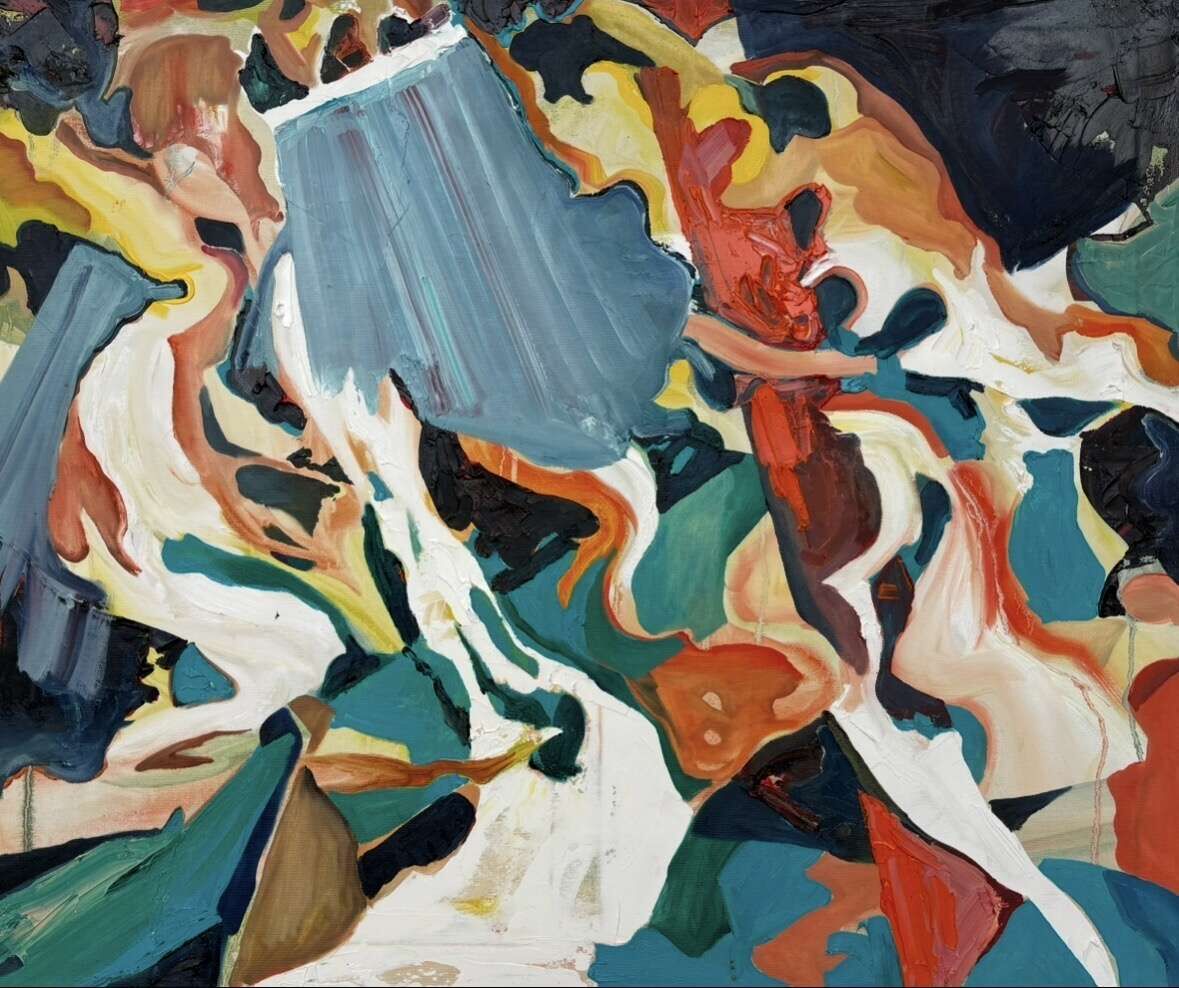


Ready for your picture of the day?
Just like Peggy Guggenheim, our passion is promoting emerging and young artists. In our ‘Artist of the Month’ section, we showcase a particularly outstanding talent from the SKM community every month. Do pop by and see for yourself!
Did you also know that you can get free advice from us? Our founder, Erich Reich, will advise you personally on which artwork, artist or style suits you best. He might even share a tip or two....
Get your free art consultation
Frequently Asked Questions
Studierenden Kunstmarkt is the leading platform for student art in the German-speaking world. It enables art enthusiasts and art lovers to buy artworks directly from art students, thereby providing them with financial support whilst they are studying.
Studierenden Kunstmarkt was founded in 2020 by Erich Reich and his brother. Erich is still the managing director of Studierenden Kunstmarkt and, together with his team, has succeeded in creating a platform that brings together art lovers, those interested in art and art students. To this day, Studierenden Kunstmarkt is entirely self-funded and has not received any external funding from investors.
At any given time, there are several hundred art students and several thousand works of art on the Student Art Market. A good place to start if you’re looking for an initial overview of the artists is the ‘Artists of the Month’ section.
Just like normal galleries, Studierenden Kunstmarkt receives a commission on each artwork sold. This funds the running of the platform, its maintenance and the salaries of Studierenden Kunstmarkt’s staff. In addition, we support the students, are on hand to advise on any queries, and run free advertising for them on Instagram, Facebook, Google and in our email newsletter, which has several thousand art lovers as subscribers.
There are many ways you can start investing in young artists on the student art market. One option is to sign up for our free email course, ‘Become an Art Expert in 7 Days’. In it, we’ll share a few basics with you, as well as some of our insider tips on which artists have particular potential. Find out more
Take a look at our most popular artists at the Student Art Market


News banner


